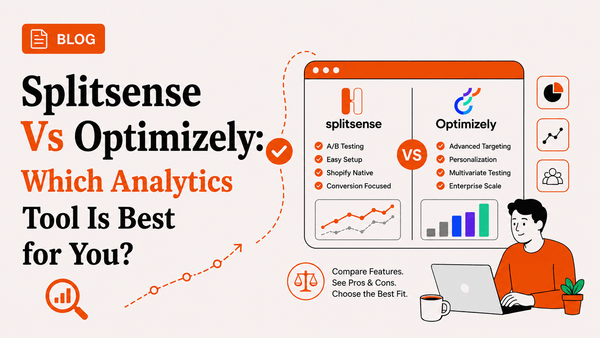
Splitsense Vs Posthog

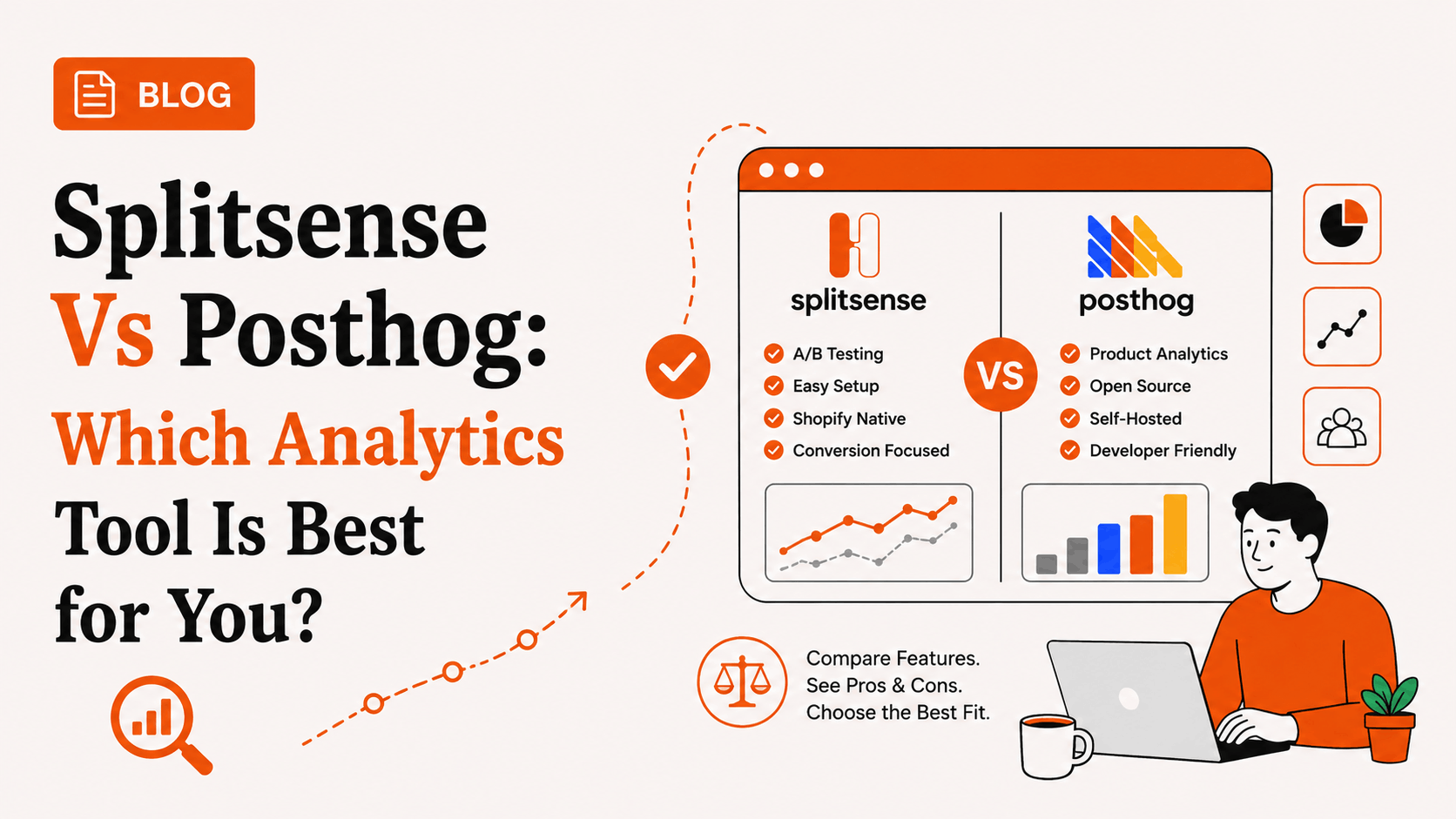
PostHog's experimentation runs on top of feature flags. You define a flag in code, wire it into your app, decide what you're testing, set your goal metric, then read the results yourself once enough traffic comes through. It's precise. It's flexible. It's also work, and most of that work lands on a developer.
Pricing is usage-based, and the free tier is one of the more generous out there: roughly a million analytics events, five thousand session recordings, and a million feature flag requests a month before you pay a penny. The catch and every PostHog review gets to this eventually is that the bill gets harder to predict once you stack replay, flags, experiments, and warehouse syncs together. Each product has its own meter, and each meter scales on its own. A team that started with "we just need analytics" can end up with a multi-line invoice it didn't quite plan for.
None of that is a knock. PostHog is upfront about it. It just tells you who the tool is for.
What SplitSense actually is
SplitSense is an agentic conversion optimisation layer. Different animal entirely.
You connect your site and your analytics (Google Analytics, Shopify, Plausible), and a set of AI agents go to work. The Analysis Agent reads your session data and recordings. The Page Analysis Agent flags the pages quietly leaking revenue. The Experiment Agent drafts the variants, runs the traffic split, surfaces the winner, then keeps watching after launch so a winning test does not slowly lose its lift.
You did not write a hypothesis. You did not touch a feature flag. You did not stare at a funnel chart on a Friday afternoon trying to work out why checkout abandonment crept up. The agent did the finding, the drafting, the running, and the monitoring. You approved a variant in the editor (or did not, and let it launch). That is the whole loop.
Setup is a single script in your site's head tag, which works on a custom site, Webflow, Framer, Wix, and the AI builders like Cursor, v0, Bolt, and Lovable. If you have ever copied a Google Analytics snippet, you can do this. There is a full walkthrough in the Splitsense setup guide if you want to see how little is involved.
Pricing is flat and you can read it without a calculator. Plans start at $29 a month, the free trial does not ask for a card, and what you pay does not balloon because your traffic had a good month.
The feature comparison, side by side
First, kill a myth. Picking SplitSense does not mean giving up your analytics. It ships with session recordings, heatmaps, a full web analytics dashboard, and native integrations, the same observability layer you would expect from a Hotjar or a PostHog. So you are not trading insight for automation. You get both. The real difference is what sits on top of the data, and who the whole thing is built for.
Here is the honest line-by-line.
| Feature | SplitSense | PostHog |
|---|---|---|
| Session recordings | Yes | Yes |
| Heatmaps and clickmaps | Yes | Yes |
| Web analytics dashboard | Yes | Yes |
| Funnels and drop-off analysis | Yes | Yes |
| Native integrations | Google Analytics, Shopify, Plausible, HubSpot | SDK and API based |
| A/B testing | Yes, AI-drafted | Yes, feature-flag based |
| Visual variant editor (no code) | Yes | Code-led (no-code builder still in progress) |
| AI agents that find and draft experiments | Yes | No |
| Auto-run tests and pick the winner | Yes | Manual |
| Continuous monitoring after a test wins | Yes, by agent | Manual |
| Feature flags | No | Yes |
| Error tracking | No | Yes |
| Surveys | No | Yes |
| Data warehouse and SQL | No | Yes |
| Setup | One script, no code | SDK install, code instrumentation |
| Pricing | Flat, from $29/month | Usage-based, metered per product |
| Built for | Marketing and growth teams | Engineers and product teams |
Look at the shape of that table and the story tells itself.
The top block is a near tie. Recordings, heatmaps, web analytics, funnels, integrations: SplitSense holds its own as a proper analytics tool, not a thin testing add-on. The middle block is where it pulls clear, because the AI agents do the finding, drafting, running, and watching that PostHog leaves to you. And the PostHog-only rows (feature flags, error tracking, surveys, the data warehouse) are real strengths, but they are engineering depth. Genuinely useful if you are shipping software. Mostly untouched if you are a growth marketer trying to lift signups.
Which is the whole point, really. PostHog is built for engineers and product teams. SplitSense is built for marketing and growth. Same starting data, very different jobs.
When PostHog is the right call
I am not going to pretend SplitSense wins for everyone, because that would be daft and you would not believe me anyway.
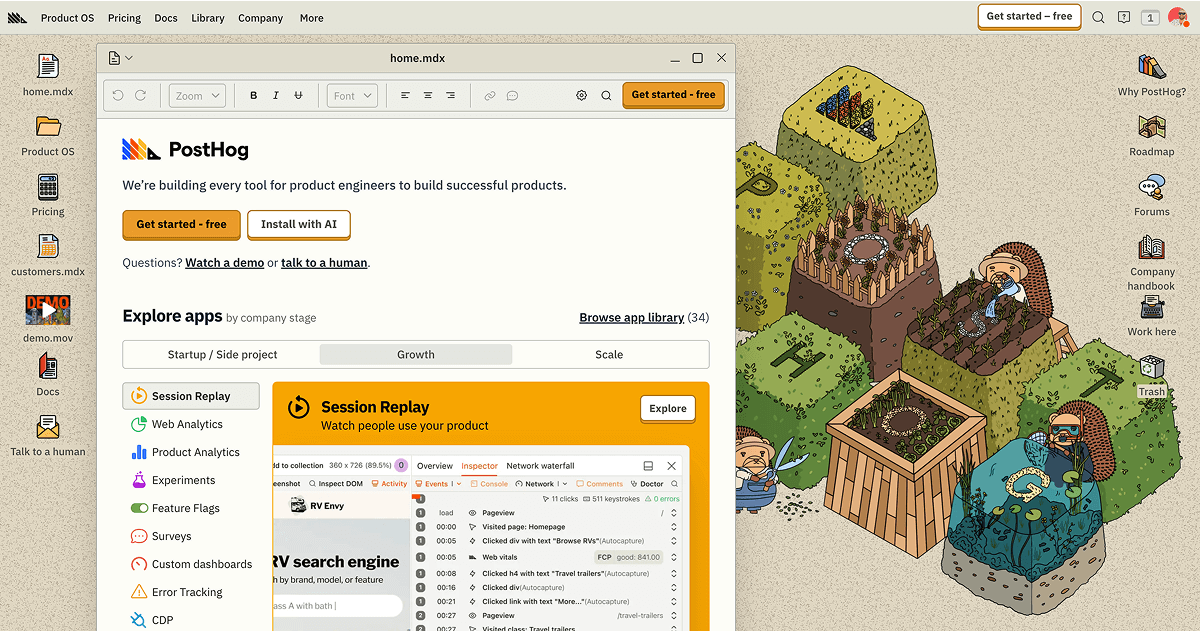
If you have an in-house product team that already lives in analytics, PostHog is hard to beat. You want session replay and error tracking and feature-flagged rollouts and experiments in one system, with your own analysts deciding what matters. You have the engineering time to instrument tests properly. You like owning the raw data and slicing it your way. Brilliant. PostHog will serve you for years and the free tier alone covers a lot of early-stage ground.
It is the platform you reach for when the bottleneck is measurement, and you have the people to act on what it shows you.
When SplitSense is the right call
But here is the situation a lot of teams are actually in.
You get decent traffic. You know, vaguely, that you are leaving signups and revenue on the table. And you do not have a CRO specialist, or a spare developer to wire up experiments every week, or the appetite to read funnel reports and turn them into a test backlog. The data is there. The doing is what never happens.
That is the gap SplitSense was built for. The bottleneck is not measurement. It is the work between the insight and the live experiment, and that is the bit the agents take off your plate. They scan the whole site, rank opportunities by revenue impact, draft the variants, run them, and tell you what won.
It is especially strong for two crowds. Ecommerce teams testing product pages, carts, and checkout (we wrote a whole piece on why your Shopify product page is probably bleeding money, and the agent goes after exactly those leaks). And SaaS teams trying to lift trial-to-paid without adding headcount, where the same principles from our SaaS landing page best practices guide get applied continuously instead of once a quarter.
No CRO hire. No engineering ticket per test. The optimisation just keeps happening in the background.
So which one, then?
If I had to put it in one line: PostHog hands you a superb toolbox and trusts you to build the furniture. SplitSense shows up, spots the wobbly chair, fixes it, and texts you the before-and-after.
Neither is wrong. They are built for different teams with different bottlenecks, and plenty of companies could happily run both (PostHog for deep product analytics, SplitSense quietly shipping conversion experiments on top).
The question that actually settles it is not "which tool is better." It is "where does my optimisation stall?" If the answer is we have the data but nobody acts on it, you do not need another dashboard to ignore. You need something that does the work.
That is the whole pitch, and you can test it on your own site free, no card required. Start your analysis here.
Still weighing up cost? We compared the best conversion optimisation tools under $10 a month, PostHog's free tier included, so you can see where everything lands on price.