Best Shopify Reviews App For $5M+ Brands (2026 Tested)
The best Shopify reviews app for $5M+ brands is Okendo, with Yotpo for retail syndication and Judge.me if you just want reviews. Real pricing and page weight.

You installed Judge.me in year one because it was free. It worked. It kept working. Then somebody in a board meeting asks why your product pages score 41 on mobile, why your reviews don't appear on Target.com, and why a $19 app is now costing you $2,400 a month in overage credits nobody approved.
I have sat in that meeting. Twice.
The reviews app question at $500K is easy. Install Judge.me, move on, go fix something that matters. The best Shopify reviews app for $5M+ Shopify brands is a completely different question, and almost every article ranking for it right now is a listicle written for a store doing 40 orders a week with "enterprise" bolted onto the headline.
So this one is only about the top end. Brands doing $5M or more, usually on Shopify Plus, usually with a real marketing team, usually with 15,000 to 400,000 existing reviews that have to survive a migration intact.
I have run or advised on four reviews platform migrations at that scale. Three went fine. One was a disaster that cost the brand about six weeks of rich snippets. I will tell you about that one too.
If you are earlier than this, the general version of this list is the one you want instead.
TL;DR
For most $5M+ Shopify brands, Okendo is the right answer. It gives you attribute reviews, the deepest Klaviyo integration in the category, clean widgets that don't wreck your Core Web Vitals, and pricing you can actually see on a web page.
Pick Yotpo instead if you need retailer syndication and want reviews, loyalty and SMS from one vendor.
Pick Bazaarvoice only if you are a CPG brand selling through Walmart, Target and Best Buy, and the syndication network is the entire reason you are buying.
Stay on Judge.me if you have looked hard at what you actually use and the honest answer is "reviews, on our own site, and nothing else." Flat $15 a month at $50M revenue is not a mistake. It is a decision.
3 Key Points
- Order-volume pricing is the trap at this revenue band. Every app on this list except Judge.me and Junip bills against orders. That is fine at 300 orders a month. At 9,000 orders a month in November it turns a $299 plan into a four-figure invoice you did not forecast. Run your Black Friday numbers before you sign anything.
- Page weight stops being a rounding error above $5M. A reviews widget that adds 200ms sounds trivial. On 4 million annual sessions it is not trivial, it is a measurable revenue line. Yotpo's widget runs roughly 150-250KB. Judge.me's runs 25-40KB. That gap is worth more than the price difference between them.
- Migration is the real cost, not the subscription. Budget one to five days of cleanup per 10,000 existing reviews. Garbled HTML entities, lost verified-buyer badges, photos that need re-uploading, and a rich snippet gap while Google re-crawls. I have seen brands lose six weeks of star ratings in the SERPs over a migration nobody planned properly.
Comparison Table
| # | App | Best For | Standout Feature | Realistic $5M+ Cost | Widget Weight | Overall |
|---|---|---|---|---|---|---|
| 🥇 | Okendo | Premium DTC brands on Shopify Plus | Attribute reviews plus deepest Klaviyo integration | $299-$499/mo | Light | ⭐⭐⭐⭐⭐ |
| 2 | Yotpo | Brands consolidating reviews, loyalty and SMS | Retail and channel syndication | $500-$3,000+/mo | Heavy (150-250KB) | ⭐⭐⭐⭐☆ |
| 3 | Judge.me | Brands that only want reviews, done fast | Flat $15/mo at any volume | $15/mo | Lightest (25-40KB) | ⭐⭐⭐⭐☆ |
| 4 | Loox | Visual brands where photo UGC drives sales | Highest photo review submission rate | $299.99/mo flat | Medium (60-100KB) | ⭐⭐⭐⭐☆ |
| 5 | Junip | Design-led brands obsessed with page speed | Flat pricing, no order-volume billing | $299/mo | Very light | ⭐⭐⭐⭐☆ |
| 6 | Stamped.io | Reviews plus loyalty without Yotpo pricing | Mid-market bundle | $399/mo | Medium | ⭐⭐⭐☆☆ |
| 7 | Reviews.io | Multi-market European brands | Native multi-language and Google Seller Ratings | $89-$500/mo | Medium | ⭐⭐⭐☆☆ |
| 8 | Bazaarvoice | CPG brands selling through major retailers | 1,750+ retailer syndication network | $3,000-$30,000/yr plus setup | Heavy | ⭐⭐⭐☆☆ |
Pricing checked against vendor pages in July 2026. This category re-prices constantly, so verify before you sign.
Why $5M+ Changes The Question Entirely
Every reviews app listicle evaluates the same five things. Free plan, widget looks, photo reviews, price, App Store rating.
At $5M+ those are mostly noise. Here is what actually decides it.
1. Order-volume pricing has a cliff, and you will find it in Q4
This is the one that gets brands. Okendo, Loox, Yotpo and Stamped all bill against monthly order volume. You pick a tier that fits your average month. Then November happens.
I watched a homeware brand blow through their Okendo credits on the Saturday of Black Friday weekend. Review requests stopped going out. They lost about eleven days of collection during their single highest-volume period of the year, which is exactly when the reviews are worth most.
The fix is boring. Model your peak month, not your average month, then price the tier against that. Or pick a flat-rate app and stop thinking about it.
Best Shopify apps for Black Friday and Cyber Monday Success?
by u/wisedodo06 in shopify
Best apps for Black Friday Thread
Loox is the clearest example of how weird this gets. Their Convert plan sits at $49.99 and then adds per-order blocks on top. Around 3,000 orders a month, Convert costs you roughly $500. The Unlimited plan is a flat $299.99 with no order maths at all. So past a certain point, the cheaper plan is the expensive one, and plenty of brands never recalculate after a growth spurt.
2. Your reviews app is now a Core Web Vitals problem
If you do 3 million sessions a year at a 2.4% conversion rate and a $70 AOV, that is roughly $5m in revenue. The commonly cited figure is that every 100ms of load time costs about 1% in sales. Take that as directionally true rather than gospel, and a 300ms widget still puts a five-figure number on the table.
The widget weights are not close. Judge.me runs around 25-40KB. Loox lands at 60-100KB. Yotpo comes in at 150-250KB, and that is before the UGC galleries.
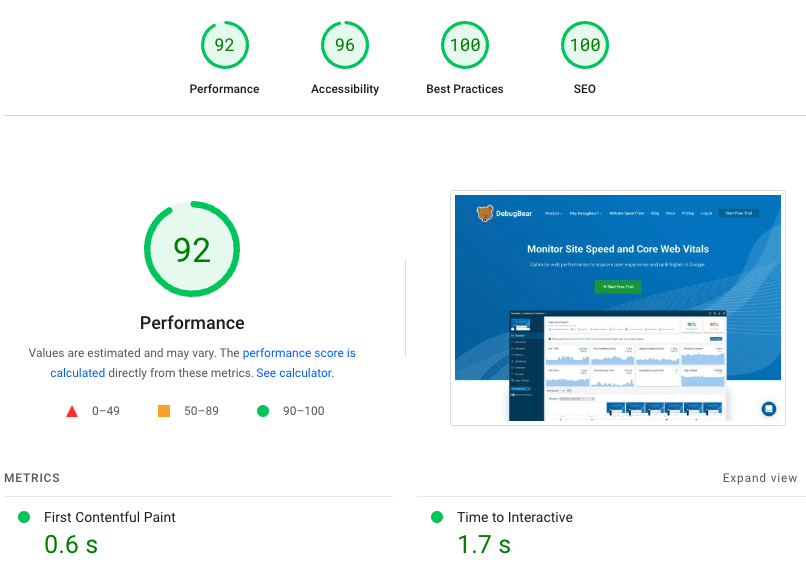
This is exactly the sort of thing that is invisible until you measure it. Run your product template through PageSpeed Insights with the reviews widget on and off. The gap will surprise you.
3. Reviews are now infrastructure for AI shopping surfaces
This one is new and it matters more than the widget design.
Shoppers are increasingly starting product research inside ChatGPT, Gemini and Perplexity rather than Google. Those systems read your product detail page as a data source. Thin review content, missing schema, or reviews locked inside a JavaScript widget that never renders server-side means you are invisible to them.
Bazaarvoice launched an Authentic Discovery API in April 2026 specifically so review content can be read by AI agents. That tells you where the category thinks this is going.
The practical version for you is simpler. Your reviews need proper Review and AggregateRating schema markup in the page HTML, not injected client-side after paint. Check yours in Google's Rich Results Test right now. I find broken review schema on about one in three brands I audit at this size.
4. Feature gating is where the real price lives
The sticker price on these apps is close to meaningless. What you pay is decided by which tier holds the one feature you cannot operate without.
Okendo puts the Klaviyo integration on the Power plan at $299. If you are on Essential at $19 expecting Klaviyo sync, you hit a wall. Retail partner syndication needs Advanced or Enterprise.
Yotpo is worse for this. Okendo's own competitive teardown claims Yotpo gates CSS review styling and review insights behind a $1,000-a-month tier. That comes from a direct competitor so weigh it accordingly, but the general pattern is real and merchants complain about it consistently.
Before you compare prices, write down the four features you will fire the vendor over. Then find the tier each app puts them in as this will give you a great refrence point.
5. Migration cost is not zero and nobody quotes it
Switching reviews apps at 40,000 reviews is a project, not an afternoon.
Budget one to five days of cleanup per 10,000 reviews. What breaks: HTML entities garble into nonsense, verified-buyer badges do not always transfer, photos need re-uploading, review dates sometimes reset, and product mapping fails on any SKU you have renamed since 2022.
The disaster I mentioned earlier was a fashion brand moving off Yotpo. Nobody checked that the new widget rendered reviews client-side by default, which meant Google stopped seeing them. Star ratings vanished from about 900 product listings for six weeks. Organic clicks to product pages dropped 23% while that ran.
1. Okendo, The Best Shopify Reviews App For $5M+ Brands
Okendo is what you install when reviews have stopped being a trust widget and started being a data source.
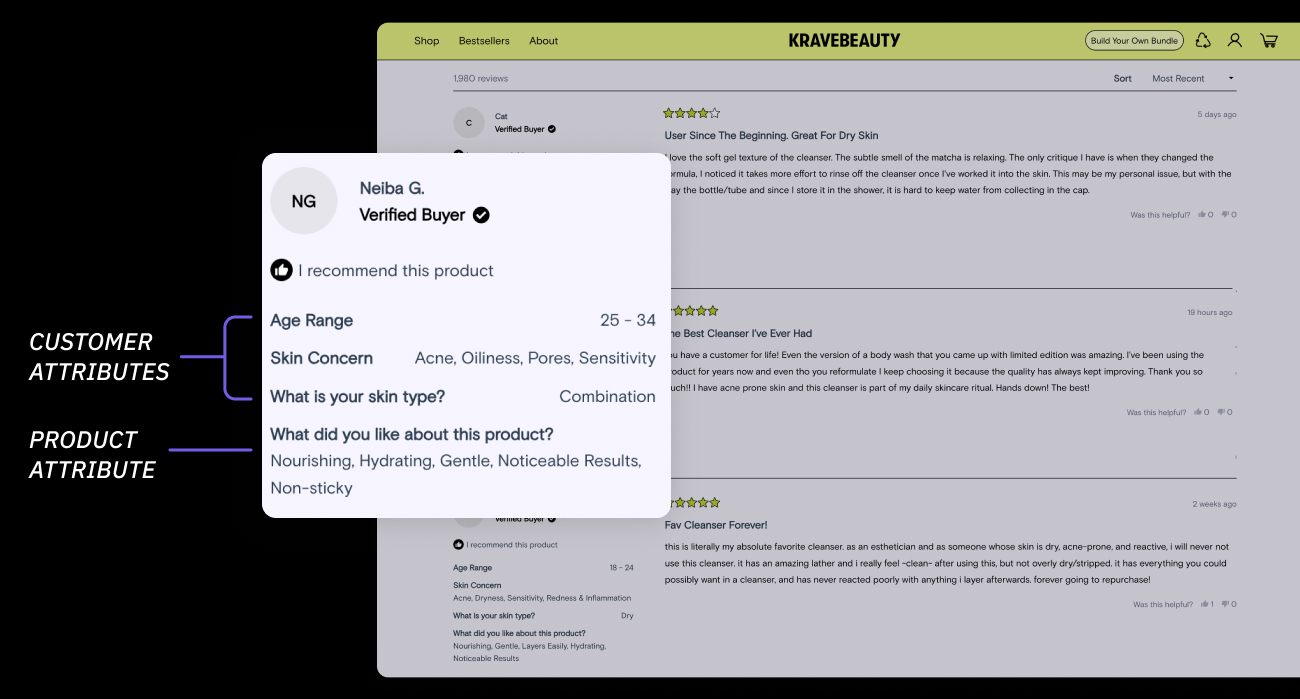
The thing that separates it at this revenue band is attribute reviews. Instead of five stars and a paragraph, you ask structured questions. How does it fit? Runs small to runs large. Shade match? Skin type? Room size?
Shoppers get to filter reviews by someone who shares their body shape or skin tone, which is a genuine conversion lever on apparel and beauty. And you get structured product data flowing into Klaviyo, which means you can segment email off review attributes rather than just purchase history.
The Klaviyo integration is the deepest in the category. You can build flows triggered by review sentiment, segment by attribute, and pipe survey responses into the same profiles. If Klaviyo is your retention engine, and at $5M+ it almost certainly is, this is the argument that wins.
It is also used by the brands you would name if I asked you to name good DTC. SKIMS, Rhode, Oh Polly. Around 18,000 brands total, which is small compared to Judge.me's install base but heavily weighted toward the top of the market.
The Okendo problems you should know about
It is Shopify-only. No WooCommerce, no BigCommerce, no headless-on-something-else. If there is any chance you replatform in the next three years, that is a real risk and your review data does not follow you.
Pricing is order-volume based, which brings the Q4 credits problem I described above. Okendo does now offer fixed annual pricing for unlimited orders, and if you are seasonal that is the version you want. Ask for it directly, because the self-serve page pushes you toward the volume tiers.
The Klaviyo gate at $299 is annoying but honest. At $5M+ you were landing on Power anyway.
| Pros | Cons |
|---|---|
| Best attribute review system in the category | Shopify-only, no platform portability |
| Deepest Klaviyo integration of any reviews app | Klaviyo sync gated behind the $299 Power plan |
| Light, fast widgets that don't drag your LCP | Order-volume billing spikes during peak trading |
| Published pricing you can read without a sales call | Retail syndication needs Advanced or Enterprise |
| Loyalty, referrals, quizzes and surveys on every plan | Smaller community than Judge.me, fewer guides online |
| Dedicated onboarding and success manager | Overkill below roughly $1M revenue |
| Bundle discounts of 30-40% across products | Bundle pricing needs a sales conversation |
| Strong migration support from other platforms | Annual unlimited pricing is not self-serve |
| Plan | Price | Orders/mo | Notes |
|---|---|---|---|
| Essential | $19/mo | Up to 200 | Entry tier, no Klaviyo |
| Growth | $119/mo | Up to 1,000 | Custom attributes |
| Power | $299/mo | Up to 5,000 | Klaviyo integration lives here |
| Advanced | $499/mo | Up to 10,000 | Retail syndication |
| Enterprise | Custom | Unlimited | Fixed annual pricing available |
Best for: Premium DTC brands on Shopify Plus running Klaviyo as their retention stack.
Install: https://apps.shopify.com/okendo-reviews
2. Yotpo, The Consolidation Play
I have a complicated relationship with Yotpo and I am not going to pretend otherwise.
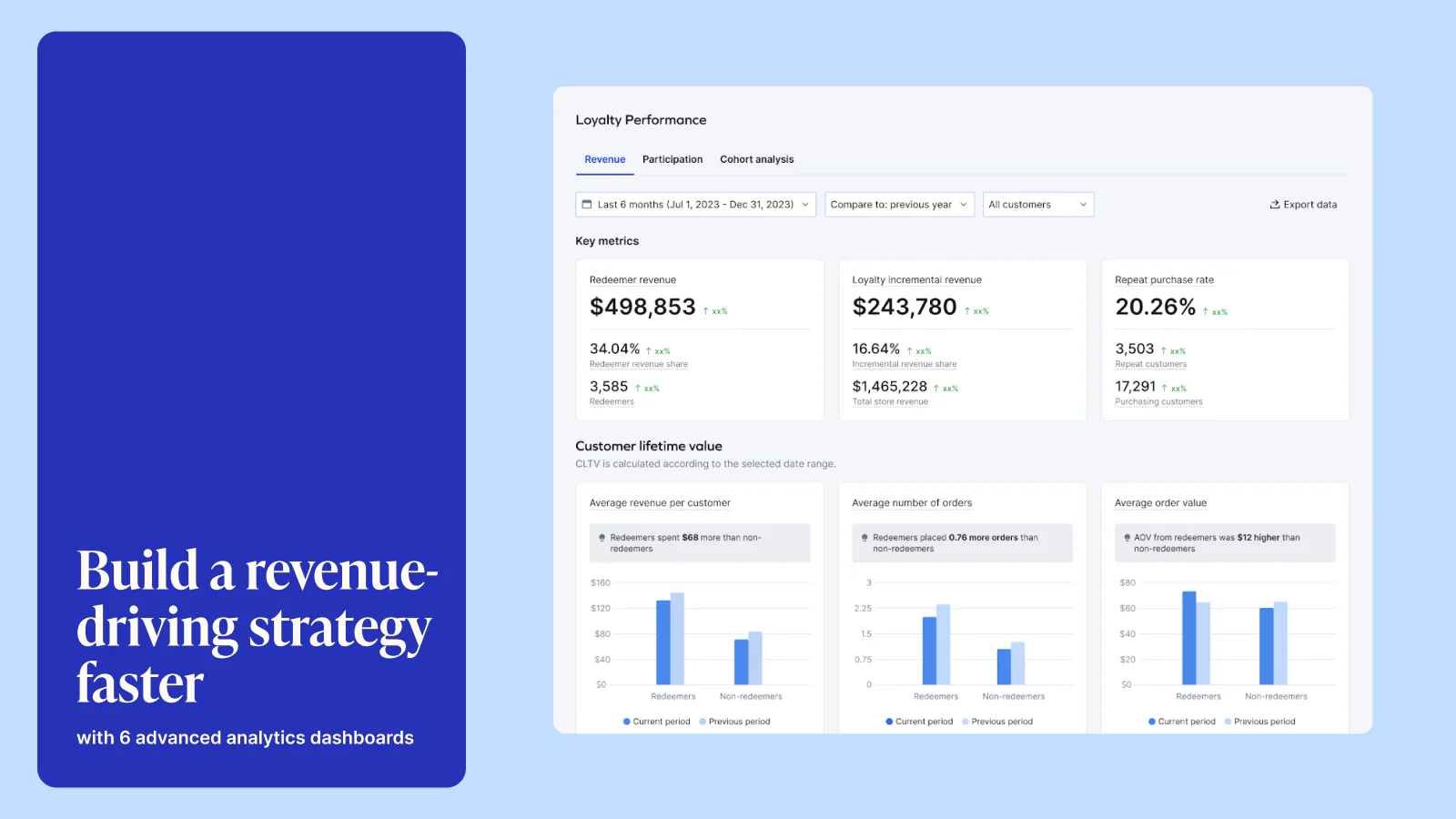
On paper it is the obvious enterprise answer. Reviews, loyalty, SMS, subscriptions, referrals and visual UGC from one vendor with one contract and one data model. At $5M+ the consolidation argument has real teeth. You can reward loyalty members with bonus points for a video review, and that flows automatically because it is all one system.
The syndication is the other genuine reason to pick it. Yotpo pushes reviews to Google Shopping, Meta, TikTok Shop and retail partner sites. If you are running seven figures of paid social and Google Shopping, seller ratings and product ratings in your ads move CTR measurably. That is not a soft benefit.
Where Yotpo falls down
Weight. Yotpo's widget is the heaviest in this comparison at roughly 150-250KB. At $5M+ session volume that is the single strongest argument against it, and it is the one Yotpo's sales team will not raise.
Pricing opacity is the other complaint, and it is universal. The published entry tiers look reasonable. The features you actually want at this size sit in tiers that require a call. Reported ranges land around $300-$1,000 a month for the full reviews suite, and $2,000+ for the platform. I have spoken to brands paying more for Yotpo than they previously paid Bazaarvoice.
And most brands use maybe a third of what they buy. If you are already committed to Klaviyo for email and SMS, the consolidation logic collapses and you are paying for overlap.
| Pros | Cons |
|---|---|
| Reviews, loyalty, SMS and subscriptions in one contract | Heaviest widget in the category at 150-250KB |
| Strongest channel syndication outside Bazaarvoice | Pricing is opaque above the entry tiers |
| Google Shopping seller ratings lift paid CTR | Key features gated behind four-figure tiers |
| Genuinely good AI review summarisation at volume | Most brands use a fraction of what they pay for |
| Enterprise integrations including Salesforce Commerce Cloud | Overlaps badly if you already run Klaviyo |
| Dedicated CSMs and enterprise support | Two to four week onboarding is realistic |
| Deepest loyalty integration in the reviews category | Some legacy UI screens still feel dated |
| Works well for multi-brand and multi-store operations | Annual contracts reduce your leverage |
Best for: Brands genuinely consolidating four vendors into one, or brands that need retail and channel syndication without going full Bazaarvoice.
Install: https://apps.shopify.com/yotpo-social-reviews
3. Judge.me, The Answer Nobody Expects At This Size
I am going to defend a $15 app in an article about $5M+ brands, and I am going to do it seriously.
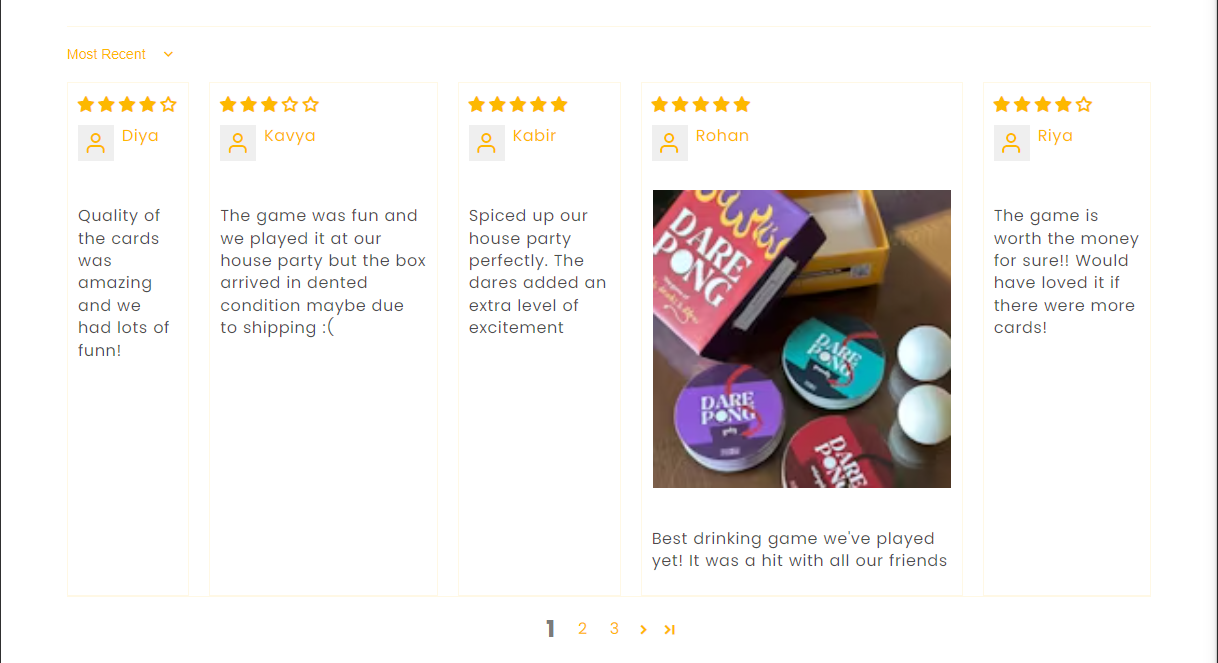
Judge.me charges a flat $15 a month. Not per order. Not per review. Flat. A brand doing 200 orders a month and a brand doing 20,000 orders a month pay the same $15. At $5M+ revenue that is a rounding error against your Shopify Plus bill of $2,300.
The widget is the lightest of anything here at 25-40KB. Rich snippets work properly out of the box. AI review replies are included rather than gated. It imports from basically everything and exports cleanly, which means it is the one app on this list that does not hold your data hostage.
Around 519,000 installs and a 5.0 rating across roughly 40,000 merchant reviews. That is not an accident.
The honest case against it at this size
No sentiment analysis, no attribute reporting, no cohort view on how review content correlates with repeat purchase. At $5M+ with a real CRO team, that gap starts to hurt because you cannot answer the interesting questions.
A lot of $5M+ brands migrate off Judge.me onto something six times the price, then use exactly the same feature set they had before. Before you migrate, write down the three things the new platform will let you do that you cannot do today. If you cannot fill in all three, stay where you are and spend the difference on something that moves revenue.
| Pros | Cons |
|---|---|
| Flat $15/mo regardless of order volume | No retail or partner syndication |
| Lightest widget of any app tested (25-40KB) | Shallow analytics, no sentiment or attribute reporting |
| Rich snippets work correctly out of the box | No loyalty or SMS, it is reviews only |
| Imports from Yotpo, Loox, Okendo, Amazon, AliExpress | Attribute reviews are basic compared to Okendo |
| Clean CSV export, minimal data lock-in | Widget styling on free is deliberately limited |
| AI replies included at the $15 tier | Support is good but not enterprise-grade |
| 130+ integrations including Klaviyo and Google Shopping | Not built for multi-store enterprise operations |
| Ten minute setup with no developer time | Fewer enterprise references to point a board at |
Best for: Brands at any revenue that need reviews on their own site and nothing else.
Install: https://apps.shopify.com/judgeme
4. Loox, If Photo UGC Is Your Actual Product
Loox is built on one idea. A review with a photo converts several times harder than a review without one, so the whole product exists to get customers to upload photos.
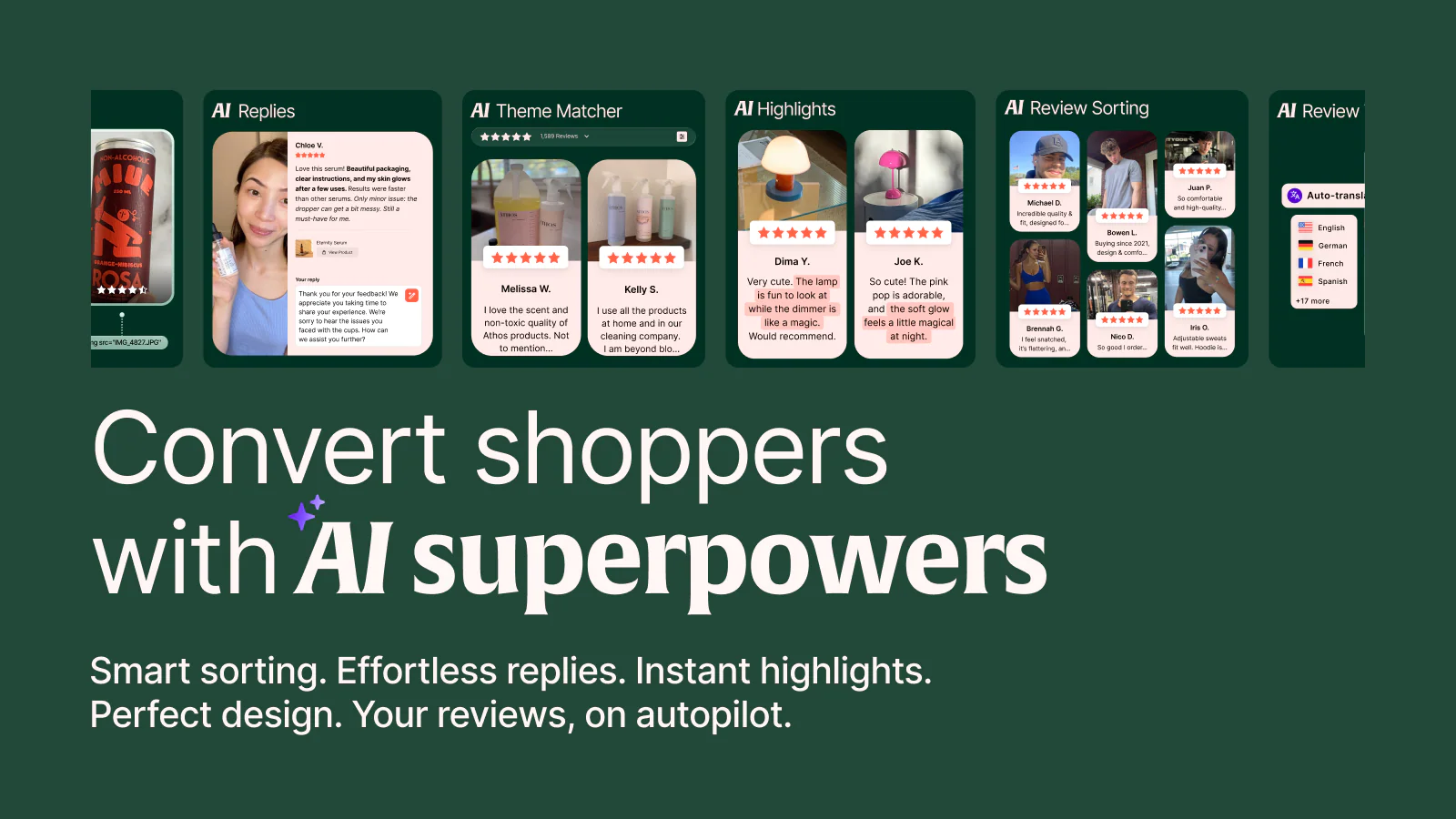
At $5M+ in fashion, beauty, jewellery or home, that idea is correct and the photo capture rate justifies the price. I have seen brands triple photo submission rates within a month of switching to Loox from a text-first app. The UGC also comes out ad-ready, which matters if you are spending heavily on Meta and TikTok.
The pricing restructured in 2026 and most articles ranking for "Loox pricing" are quoting plans that no longer exist. The Scale plan is gone. What is live now is Beginner from $0, Convert at $49.99 with per-order blocks stacked on top, and Unlimited at a flat $299.99.
For a $5M+ brand the answer is almost always Unlimited. Convert tops out at $999.99 a month once you hit 6,000 orders in a cycle, which is a mad ceiling for a mid-tier plan. Run both numbers if you are doing 1,800 orders a month or more.
Shopify-only, same portability risk as Okendo. Widget lands at 60-100KB, so heavier than Junip or Judge.me but nowhere near Yotpo.
| Pros | Cons |
|---|---|
| Highest photo review submission rate of any app | Shopify-only, no platform portability |
| Gorgeous galleries and sliders with no dev work | Convert plan per-order maths gets expensive fast |
| UGC comes out ad-ready for Meta and TikTok | Pricing restructured twice recently, hard to plan around |
| Built-in discount flows to incentivise photo uploads | Q&A and attribute features lag Okendo badly |
| Referral programme included | Widget weight is mid-pack at 60-100KB |
| Flat $299.99 Unlimited tier removes volume anxiety | Loox branding on widgets below higher plans |
| Strong for visual categories specifically | Weak fit for non-visual products |
| Reliable, well-established, low drama | Analytics are thinner than Okendo or Yotpo |
Best for: Visual-category brands where customer photos are doing the selling.
Install: https://apps.shopify.com/loox
5. Junip, The Page Speed Purist's Pick
Junip is the one I recommend when the brand cares about two things above all else. How the widget looks and how fast the page loads.
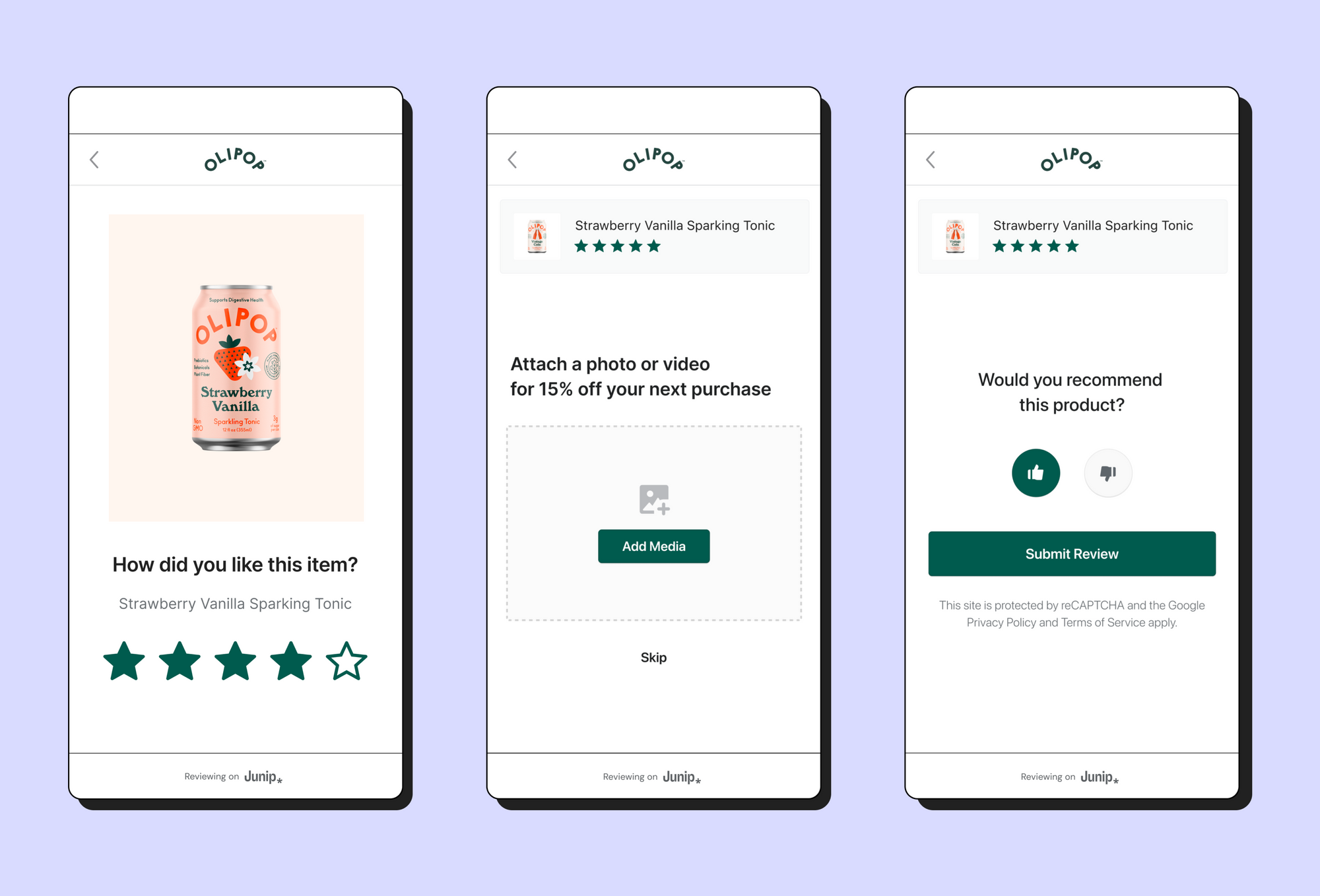
It is a three-time Shopify Staff Pick and that is not accidental. The widgets are the best-looking in the category and the mobile review submission flow is genuinely thumb-friendly, which matters because most reviews get written on a phone.
Pricing is flat. Free, Core at $29, Growth at $79, Premium at $299. No order-volume billing. For a seasonal brand that alone can be the deciding factor, because your November bill equals your February bill.
The catch is scope. Junip is Shopify-only, has no loyalty, no Q&A, no SMS collection and no retail syndication. It does reviews, beautifully and fast, and stops there. At $5M+ that is either exactly right or badly insufficient, depending entirely on whether you need the rest.
| Pros | Cons |
|---|---|
| Lightest widget performance of the premium apps | Shopify-only |
| Flat pricing with no order-volume billing | No Q&A, loyalty or SMS collection |
| Best-looking widgets on the App Store | No retail syndication |
| Excellent mobile review submission flow | Smaller user base means fewer guides and integrations |
| Unlimited review requests on all plans | Attribute reviews are thinner than Okendo |
| Three-time Shopify Staff Pick | Slower feature roadmap than the giants |
| Predictable budgeting for seasonal brands | Fewer enterprise references |
| Clean, modern admin that doesn't need training | Premium tier at $299 buys less scope than rivals |
Best for: Design-led brands with seasonal volume swings that only need reviews.
Install: https://apps.shopify.com/junip
6. Stamped.io, The Mid-Market Bundle
Stamped sits between Judge.me and Yotpo and does reviews plus loyalty without enterprise pricing.
It is a reasonable product. The AI Smart Assist feature coaches customers into writing longer, more useful reviews, which produces better content than generic five-star drops. Q&A is strong, and if you sell products with lots of pre-purchase questions like supplements or technical apparel, that widget earns its keep on its own.
Two things to flag. Stamped removed its free plan in 2025, so there is no way to trial it without paying. And photo reviews, CSS customisation and imports all sit on the Premium plan at $59, not the $23 Basic. Pricing runs up to around $399.
At $5M+ I would generally pick Okendo over it. Stamped's sweet spot is $1M-$3M brands who want the loyalty bundle and cannot justify Yotpo.
Best for: Brands wanting reviews and loyalty in one place at mid-market pricing.
Install: https://apps.shopify.com/product-reviews-addon
7. Reviews.io, For Multi-Market European Brands
If you sell across the UK, France, Germany, Italy and Spain, Reviews.io is built for the assumption that you operate in five languages at once rather than translating one.
It also handles Google Seller Ratings properly out of the box, which is a paid ads lever rather than an SEO one. At $5M+ with serious Google Shopping spend, seller ratings on your ads are worth real money.
No permanent free plan. Pricing starts around $45 and Pro sits at $89, with enterprise custom above that. Smaller App Store presence than the big names, and the admin is functional rather than beautiful.
Best for: Pan-European brands running multi-language stores and heavy Google Shopping spend.
Install: https://apps.shopify.com/reviews-io
8. Bazaarvoice, Only If The Network Is The Product
Bazaarvoice is not really a Shopify app. It is an enterprise UGC platform that happens to integrate with Shopify.
The reason anyone buys it is the syndication network. Somewhere north of 1,750 retailer sites including Walmart, Target, Best Buy, Lowe's, Walgreens and CVS. If you are a CPG brand and your products sit on those shelves and those product pages, Bazaarvoice pushes your DTC-collected reviews onto them. Nothing else in this article does that at the same scale.
They also launched an Authentic Discovery API in April 2026 aimed at making review content readable by AI shopping agents, which is a genuinely forward-looking move.
Now the price. Third-party procurement data puts implementation fees at $10,000 to $50,000+, with annual platform fees of $3,000 to $30,000+ on top. First-year total can clear $60,000. Contracts are long. Implementation is measured in months.
If you sell DTC only, this is an enormous amount of money for a feature you will never switch on. If your wholesale channel is a meaningful part of the business, it might be the only realistic option.
Where The Reviews App Sits In A $5M+ Shopify Stack
Reviews do not exist in isolation and picking the app without looking at the stack around it is how you end up paying twice for the same capability.
Here is roughly how the stack shakes out at this revenue band.
| Layer | Typical Tool | Typical $5M+ Monthly Cost | Overlaps With Reviews? |
|---|---|---|---|
| Platform | Shopify Plus | $2,300 | No |
| Email and SMS | Klaviyo | $750-$2,000 | Yes, if you pick Yotpo |
| Reviews and UGC | Okendo or Yotpo | $299-$1,000 | — |
| Loyalty | Okendo Loyalty, Smile, LoyaltyLion | $199-$549 | Yes, bundled in Okendo and Yotpo |
| Post-purchase upsell | ReConvert, Zipify OCU | $150-$800 | No |
| Analytics and CRO | Splitsense, Triple Whale | $79-$2,000 | No |
| Support | Gorgias | $100-$300 | Partially, via review response |
| Subscriptions | Recharge, Skio, Smartrr | $300-$2,000 | No |
Two overlaps to watch.
Klaviyo and Yotpo. If Klaviyo runs your email and SMS, buying Yotpo's SMS module is paying twice. That collapses the entire consolidation argument for Yotpo and usually pushes the decision to Okendo.
Loyalty. Okendo includes loyalty, referrals, quizzes and surveys on every plan, with bundles running 30-40% below buying separately. If you are currently paying LoyaltyLion or Smile alongside a separate reviews app, price the Okendo bundle before you renew either.
The rule I use is simple. Count how many vendors are billing you for capabilities that overlap. At $5M+ I usually find at least two, and consolidating them pays for the reviews platform upgrade outright.
The Thing Most Brands Get Wrong About Reviews At This Size
Picking the app is the small decision. What you do with the widget afterwards is the big one, and almost nobody tests it.
I see $10M brands with a beautifully configured Okendo instance, 40,000 reviews collected, and the widget sitting in the exact default position the app installed it in, below the fold, below the description, below the shipping accordion. Nobody has ever moved it. Nobody has ever tested whether the photo gallery near the top of the page beats the star rating in the title area.
The variables that actually move revenue here are placement, ordering, how many reviews show before the fold, whether you surface the attribute filters, and whether the aggregate rating appears next to the price or under it. Every one of those is testable. Almost none of them get tested.
This is half of why we built Splitsense. Our agent runs on your live site, finds the leaks, forms hypotheses and runs the experiments without you having to brief an agency for six weeks. Review widget placement is one of the highest-yield tests it finds on ecommerce sites, which tells you how often it is left untouched.
If your product pages are leaking for reasons you have not identified yet, I wrote about the common ones in your Shopify product page is probably bleeding money.
A Few Things Nobody Tells You
Review schema breaks. A widget update ships, the JSON-LD changes shape, and your stars quietly disappear from the SERPs. Nobody notices for a month because organic traffic decays gradually rather than dropping off a cliff. Put the Rich Results Test in a monthly checklist and run it on three product templates.
Ask for the annual unlimited contract. Okendo, Yotpo and most of the others will do fixed annual pricing for unlimited orders if you ask. The self-serve pages push volume tiers because volume tiers make them more money. At $5M+ you have the leverage. Use it.
Your review request timing is worth more than your app choice. A request that arrives before the customer has used the product gets ignored. One that lands a few days after they have formed an opinion gets answered. Moving the send delay can double submission rate, and it costs nothing. Test it before you spend a penny on a migration.
Do not run two reviews apps at once. I still see this at $5M+, usually because a migration never finished. Duplicate email touches to the same customer, two widgets fighting for the same DOM node, and double the page weight. Finish the migration or roll it back.
Reviews compound, so migrate in January. The Spiegel Research Center work is widely cited for a reason, with displayed reviews lifting purchase likelihood substantially over products with none. That value accrues over years. Losing six weeks of it during Q4 to save a project manager three weeks of planning is a bad trade.
Pair this with a decent SEO app and the two compound. My 11 best SEO apps for Shopify in 2026 list covers what I would actually install.
How To Actually Pick
Decision time.
If you run Klaviyo and sell premium DTC: Okendo. The attribute reviews and Klaviyo depth are worth the $299 on their own.
If you sell through Walmart, Target or Best Buy: Bazaarvoice, reluctantly, because nothing else has the network.
If you genuinely want one vendor for reviews, loyalty and SMS: Yotpo. Just confirm you are not already paying Klaviyo for half of it.
If photo UGC is what sells your product: Loox on the flat Unlimited plan.
If your volume swings hard seasonally: Junip. Flat pricing removes the Q4 credits problem entirely.
If you sell across five European markets: Reviews.io.
If you only need reviews on your own site: Judge.me, still, at $15 a month, at any revenue. It is not the exciting answer but it is often the correct one.

The Honest Conclusion
If I were handed a $5M+ Shopify Plus brand tomorrow with no other context, I would install Okendo. Attribute reviews plus the Klaviyo integration plus light widgets plus published pricing is the strongest combination in the category for this revenue band.
But I would ask one question first, and it is the question this whole article is really about.
What are you going to do with the reviews that you cannot do today?
If the answer is "segment Klaviyo flows by fit attribute and surface filtered reviews on the PDP," then migrate. That is a real capability and it is worth the project.
If the answer is "our current app feels a bit cheap for a brand our size," then do not migrate. Spend the money and the six weeks on testing where the widget actually goes instead. That will make you more money than any platform on this list.
Then go and check your review schema. I will bet you a coffee it is broken.
Frequently Asked Questions
What is the best Shopify reviews app for $5M+ brands?
Okendo is the best Shopify reviews app for most brands doing $5M or more. It combines attribute-based reviews, the deepest Klaviyo integration in the category, lightweight widgets and published pricing. Yotpo is the better pick if you need retail syndication or want reviews, loyalty and SMS from a single vendor.
Is Judge.me good enough for a $5M+ Shopify store?
Yes, if you only need reviews on your own site. Judge.me charges a flat $15 a month at any order volume and has the lightest widget of any app tested. It has no retail syndication, no loyalty and shallow analytics, so it stops being enough when you need review data feeding other systems.
How much should a $5M+ Shopify brand pay for a reviews app?
Most land between $299 and $1,000 a month. Okendo Power sits at $299 and Advanced at $499. Yotpo's full reviews suite typically runs $300 to $1,000, with enterprise platform deals above $2,000. Bazaarvoice is a different category entirely, with first-year costs that can clear $60,000.
Does a reviews app slow down a Shopify store?
Every reviews app adds weight. Judge.me runs around 25-40KB, Loox lands at 60-100KB and Yotpo comes in at roughly 150-250KB. At $5M+ session volumes that difference is measurable revenue, so test your product template in PageSpeed Insights with the widget toggled on and off before committing.
Should I use Okendo or Yotpo for a Shopify Plus store?
Pick Okendo if Klaviyo runs your email and SMS, because Yotpo's consolidation advantage disappears when you are already paying Klaviyo for the same capability. Pick Yotpo if you need channel or retail syndication, or if you are genuinely replacing four vendors with one.
Do I need review syndication at $5M+?
Only if you sell through major retailers. Syndication pushes your DTC reviews onto retailer product pages like Walmart and Target. If you are DTC-only, you are paying for a feature you will never switch on, and Okendo or Judge.me will serve you better for less.
How long does it take to migrate reviews between Shopify apps?
Budget one to five days of cleanup per 10,000 existing reviews. Common issues include garbled HTML entities, lost verified-buyer badges, photos needing re-upload and product mapping failures on renamed SKUs. Plan the migration for January rather than Q4.
Will migrating reviews apps hurt my SEO?
It can, if the new widget renders reviews client-side without proper schema. I have seen a brand lose star ratings on roughly 900 product listings for six weeks after a migration. Validate Review and AggregateRating schema in Google's Rich Results Test before and after the switch.
Do reviews matter for AI shopping assistants?
Increasingly yes. ChatGPT, Gemini and Perplexity read product pages as data sources when shoppers research through them. Reviews locked inside client-side JavaScript with no schema markup are effectively invisible. Bazaarvoice launched an API in April 2026 specifically to make review content readable by AI agents.
Is order-volume pricing or flat pricing better for a high-revenue store?
Flat pricing is safer for seasonal brands. Order-volume plans from Okendo, Loox, Yotpo and Stamped spike during your highest-trading months, which is exactly when you least want review collection to stop. Ask any vendor for fixed annual unlimited pricing, because most will offer it at this revenue band even though the self-serve page does not show it.