Splitsense vs Optimizely

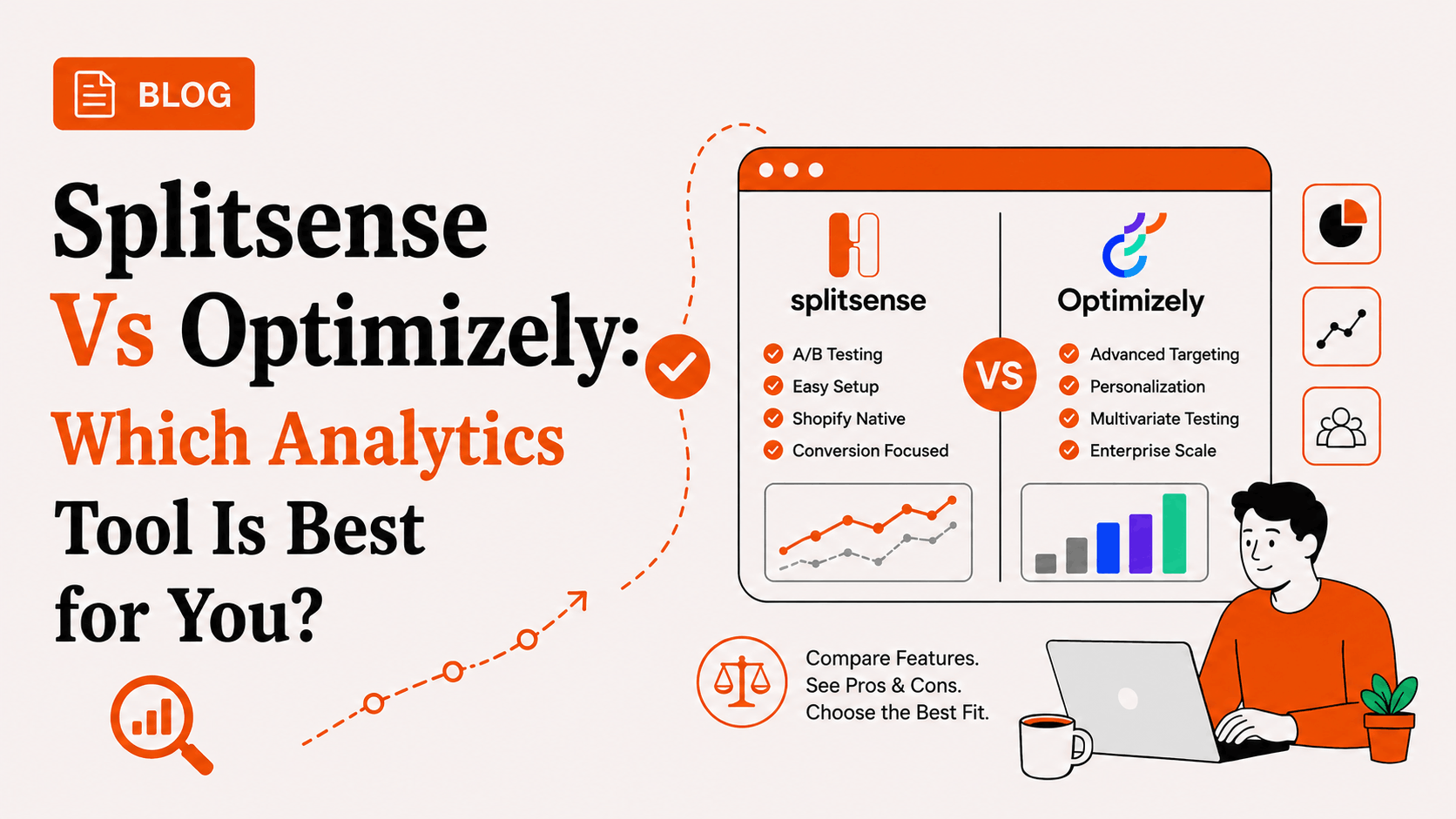
Try something for me. Go to Optimizely's website right now and find a price.
Go on. I'll wait.
You won't find one. There isn't a number anywhere. There's a button that says "Contact Sales," which is enterprise software's polite way of saying the price is however much we think you can afford. Fill in the form, book the call, sit through the demo, and eventually a quote lands in your inbox, custom-scoped to your traffic, your products, your willingness to flinch.
So that's the relationship before you've spent a penny. Let me tell you what happens after.
First, the fair bit, because Optimizely earns it
I'm not going to pretend Optimizely is some flimsy thing. It absolutely is not. This is the heavyweight champion of experimentation, the company that more or less defined the category. The difference between Optimizely and most "tools that happen to have A/B testing" is that, for Optimizely, testing isn't a feature bolted onto the side. It is the entire point of the business.
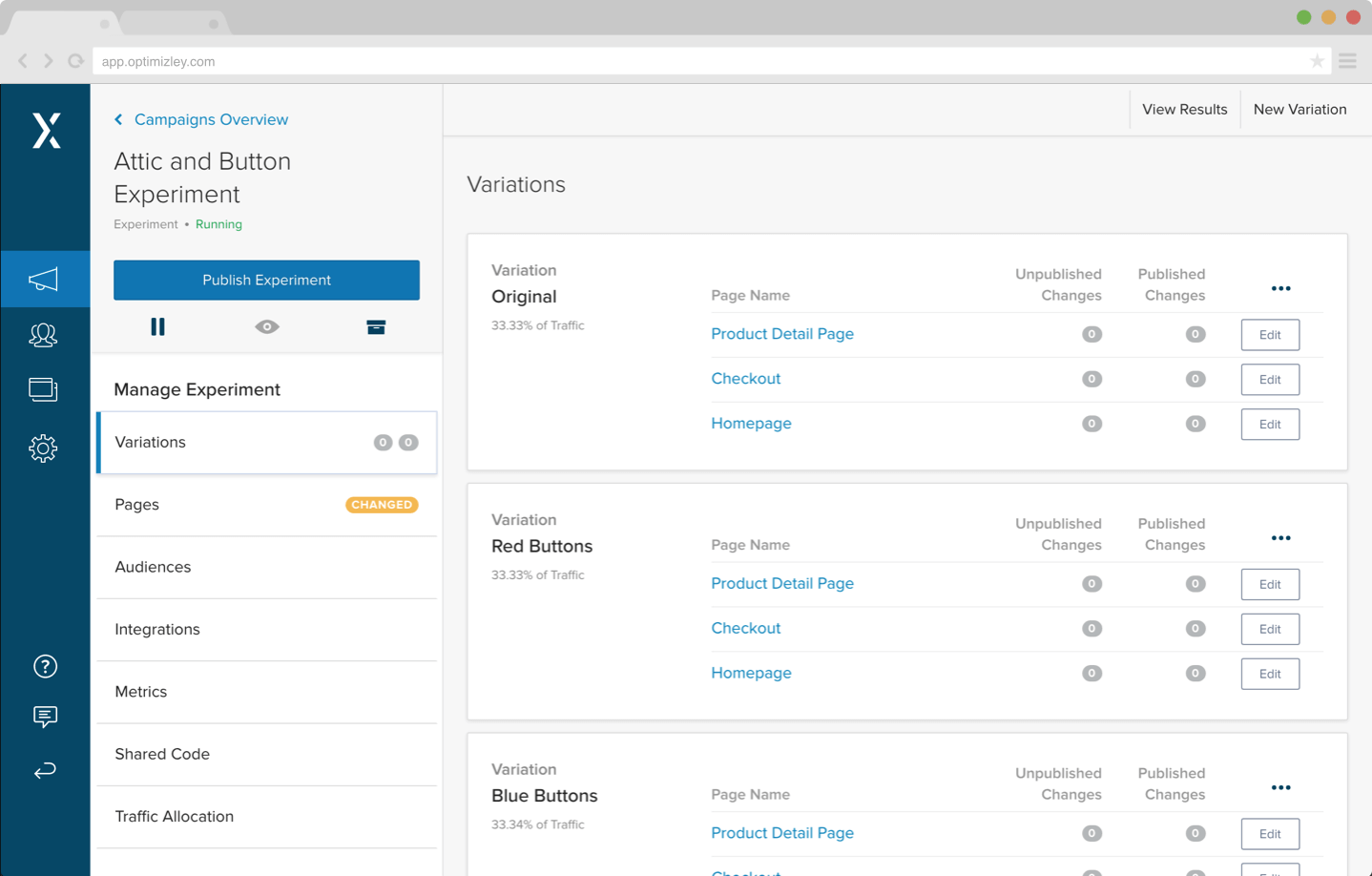
The statistical engine is genuinely excellent. Multi-armed bandits, sample ratio mismatch detection, sequential testing, the proper grown-up maths that stops you from declaring a winner on a Tuesday afternoon because one variant got lucky. If you are running dozens of concurrent experiments across high-traffic properties, with analysts who dream in confidence intervals, Optimizely is built precisely for you. It even comes wrapped in a full digital experience platform now, with a CMS, personalization, commerce, and a swarm of AI agents called Opal, so the whole thing sprawls across your marketing stack like a very expensive, very capable octopus.
Credit where it's due. For the right company, it's superb.
The trouble is the words "the right company" are doing an enormous amount of lifting in that sentence.
Now, the bit they email you later
Optimizely quietly walked away from small businesses years ago and went all in on the enterprise. The pricing reflects that with admirable honesty. Web Experimentation on its own, the cheapest way in, starts at roughly $36,000 a year, and most companies end up somewhere between $50,000 and $200,000 once you factor in traffic and the products you'll inevitably get talked into. Full enterprise bundles sail past $400,000.
There's a real UK quote floating around in a government procurement document, and it's instructive: software service fee of £25,525, plus an "Onboarding Accelerator" charge of £11,000, for a year-one total of £36,525. Sit with that "Onboarding Accelerator" for a second. You are paying eleven grand for the privilege of being shown where the buttons are. Marvellous.
It gets better. Contracts are annual, often multi-year, with no monthly option, and the auto-renewal clauses are notorious. Miss your cancellation window and congratulations, you've accidentally bought another year of enterprise software, which is a bit like a gym membership except the bill has four extra zeros and a sales rep attached. Pricing scales with monthly tracked users too, so the moment one of your experiments lands on a high-traffic homepage during a big launch, it can chew through your MTU allowance in days. Lovely problem, having all that traffic. Less lovely, the overage invoice that follows.
The cost that isn't even on the invoice
Here's the part the price tag hides completely.
Optimizely is a cockpit. A brilliant, instrument-packed cockpit. But you still have to fly the plane, and you need a crew to do it. Optimizely itself reportedly recommends a five-person team to run a testing programme properly. The platform gives you the rails. It does not give you the ideas. You still have to spot the friction, write the hypotheses, build the variants, QA them across browsers, wrangle the developers, manage the roadmap, and read the results without fooling yourself.
So the £36,000 is really just the cover charge. The band, the salaries of the people who actually make the thing produce results, costs considerably more. For a global brand with a dedicated CRO function, that maths works beautifully. For a founder, a lean marketing team, or anyone who doesn't have a spare conversion specialist lying around, it's a tool that mostly sits there looking powerful and judging you.
Splitsense does the flying
This is the whole reason Splitsense exists, so let me be clear about the difference.
Splitsense doesn't hand you a cockpit and wish you luck. The AI flies the plane.
You drop one script into the <head> of your site, and that's the setup, the entire thing. Any platform, a custom build, Webflow, Framer, Wix, a Shopify store, whatever you happen to run. (There's a Shopify app if that's your world, but Splitsense isn't Shopify-only, it works on any website on its own steam.) From there the AI does the loop you'd normally need that five-person team for. It reads your pages, finds the friction, forms the hypotheses, builds the variants, runs them against live traffic, reads the statistics, and keeps the winners.
No onboarding accelerator. No five seats. No annual handcuffs. No "Contact Sales." It's nine dollars a month, and the price is, shockingly, just written down where you can see it.
Optimizely gives you the world's best experimentation machinery and expects you to staff a department around it. Splitsense is the department.
So who should buy which?
I'll be straight, because pretending one tool wins every fight is how blogs lose credibility.
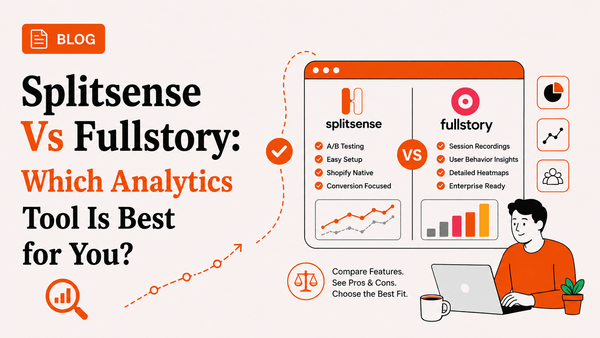
Buy Optimizely if you're a large organisation with a genuine experimentation programme, the traffic to feed it, and the headcount to run it. If you need server-side feature experimentation, deep personalization layered over testing, enterprise compliance, and statistical rigour that'll satisfy a sceptical data science team, Optimizely is worth every one of its many thousands. It is a serious platform for serious, well-resourced operations, and it would be daft to claim otherwise.
Buy Splitsense if you're a founder, a small team, a marketer, or honestly anyone whose problem is "I need more of my visitors to actually buy" and whose constraint is "I do not have £36,000 and five spare humans." If your testing programme so far has consisted of meaning to run a test, Splitsense removes the bit that never happens: the work.
The honest summary is that these two aren't really competing for the same customer. Optimizely is for companies that experiment as a profession. Splitsense is for everyone who just wants the results without hiring the profession.
And if you're picking one, which most people building a business rather than running a 50-person growth team are, my recommendation is Splitsense. Not because Optimizely is bad. It's genuinely excellent. It's because the best stats engine in the world does nothing for you if you can't afford the ticket or staff the crew, and a tool that quietly runs the experiments itself beats a tool that merely lets you, every single time you're short on budget or hours.
A pricing page you have to phone someone to read has never made anyone a single pound either.
Shopping around properly? We did the same honest breakdown for Splitsense vs PostHog and Splitsense vs FullStory. Or, if you just want to stop your product page haemorrhaging money before you compare a single platform, start here.