22 Best Shopify Dropshipping Apps for 2026

TL;DR
The Shopify App Store offers diverse dropshipping solutions for 2026, from budget-friendly options like DSers (free) and CJ Dropshipping to premium platforms like Zendrop ($49/month) with US warehouses and faster shipping. Success depends on matching your app choice to your target market location, budget, and automation needs—US/EU suppliers deliver in 2-7 days but cost more, while AliExpress integration offers cheaper products with 15-30 day shipping times.
Key Takeaways
- Top recommendations by use case: Zendrop for premium quality and US shipping (2-5 days), DSers for AliExpress bulk processing, Spocket for US/EU suppliers, AutoDS for multi-channel automation, and Printful for print-on-demand with zero inventory risk
- Pricing varies dramatically: Free tiers exist (DSers, CJ Dropshipping, Syncee browsing) but expect $19-99/month for full features. Calculate total costs including product prices, shipping, transaction fees, and marketing—not just app subscriptions
- Supplier location is critical: US/EU suppliers cost 20-40% more but deliver in 2-7 days vs 15-30 days from China. Customer expectations for fast shipping make domestic suppliers worth the premium for building repeat business
- Essential features: Automated order fulfillment, real-time inventory sync (prevents overselling), bulk import tools, pricing automation with profit calculators, and analytics dashboards to identify winning products
- Common fatal mistakes: Skipping product quality testing before listing, hiding long shipping times, ignoring inventory monitoring (40% of customers never return after stockout cancellations), and relying on single suppliers
- Realistic expectations: Typical profit margins are 15-30%, not passive income overnight. Allocate $100-300 for initial product testing and expect months of iteration to find winning products and build sustainable operations
Best Tip - South America is an excellent market for dropshipping as shipping delivery expectations in this region are lower than in areas with better infrastructure.
The Shopify App Store has become an essential destination for merchants looking to elevate their e-commerce operations, offering a vast collection of specialised tools designed to enhance every aspect of their online store. For anyone who is exploring the world of shopify dropshipping, the Shopify App Store provides a curated selection of powerful dropshipping apps that integrate seamlessly into your store.
These apps span a wide range of business functions, from connecting merchants directly to suppliers and fulfilment networks, to powering analytics dashboards, streamlining conversion optimisation, and amplifying marketing efforts, automating everything from product imports and order processing to customer acquisition and revenue growth.
Whether you're just launching your Shopify store or looking to scale an existing dropshipping business, the Shopify App Store gives merchants the tools they need to streamline operations, improve efficiency, and grow their business without the complexity of hiring developers to do it for you.
Now luckily for you, we have too much time on our hands here at Spitsense and as a result, JK(He supports spurs if you know football) and myself, spent a whole day reviewing the various shopify dropshipping apps available, below you will find key insights, reviews and analysis into what we found, so you can avoid the rabbit whole we fell into.
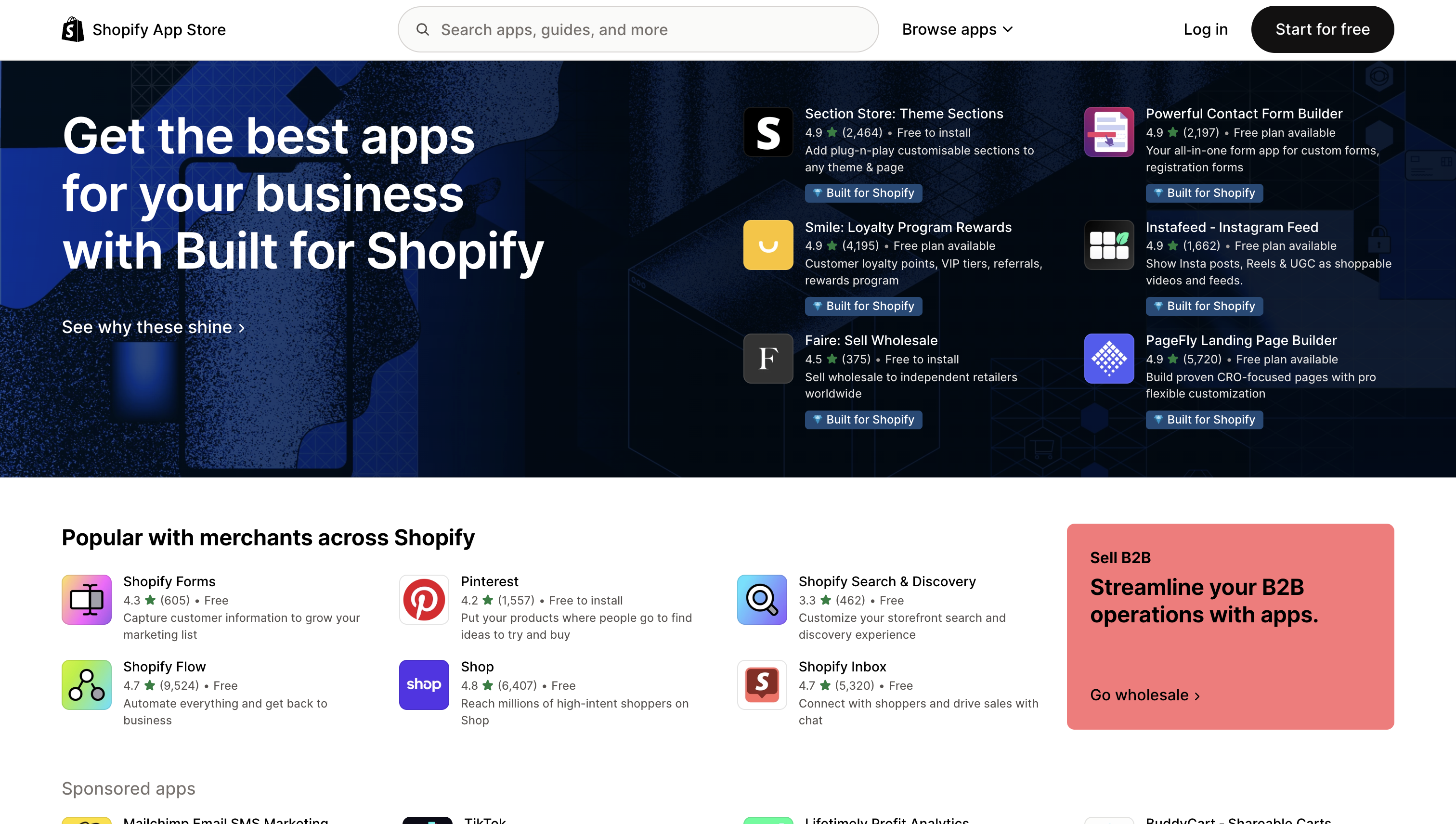
We have divided this up into many different categories, all of which are essential for running a dropshipping business on shopify. They will help you create incredible experiences for your customers, source products and automate fulfilment for you.
Quick Comparison of the Best Shopify Dropshipping Apps
To help you choose the right dropshipping solution for your store, here's a comprehensive comparison of the top apps available in 2026:
💡 Tip: New dropshippers can save at least two hours daily by using apps that automate product imports, inventory syncing, and order forwarding.
Choose based on your budget, target shipping times, and automation needs. Beginners should start with free options like DSers or CJ Dropshipping, while growing stores benefit from premium features offered by Zendrop or AutoDS.
1. Zendrop
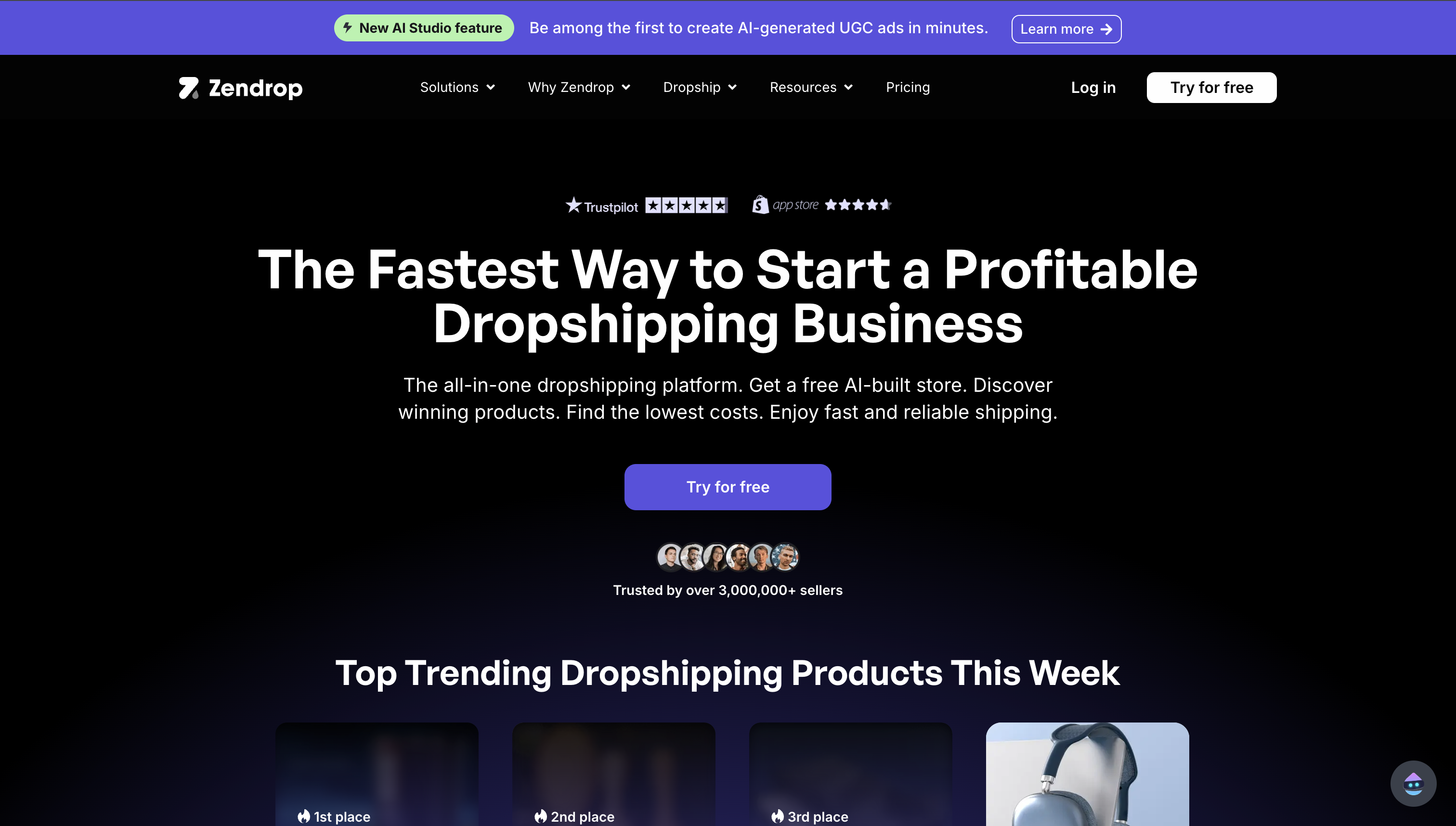
Zendrop has emerged as a premium dropshipping solution for Shopify merchants who prioritize product quality and reliable fulfilment over rock-bottom prices. Unlike traditional dropshipping platforms that simply aggregate suppliers, Zendrop operates a private network of over 30,000 vetted manufacturers across the US and China, ensuring every product meets stringent quality standards before reaching your customers.
Product Sourcing and Quality Control
What sets Zendrop apart is its commitment to quality assurance. Every product undergoes quality control checks in their warehouses located in both China and the US, significantly reducing the risk of customer complaints and returns. Can't find a specific product in their catalog? Zendrop accepts product links from AliExpress, Amazon, eBay, Temu, and Alibaba to source items through their supplier network, giving you access to virtually any product while maintaining their quality standards.
Pricing Structure
Zendrop offers flexible pricing to accommodate businesses at different stages:
- Free Plan: Perfect for testing the platform, includes access to top-tier products and 24/7 support
- Pro Plan: $49/month or $399 annually, featuring automated fulfilment, custom branding options, and access to US-based products
- Plus Plan: $79/month or $549 annually, includes everything in Pro plus advanced coaching and private product listings
- Usage-Based Billing: Shopify-specific option where subscription costs scale with the number of linked products in your store
Seamless Shopify Integration
Connecting Zendrop to your Shopify store takes just a few clicks, with automated fulfilment handling order processing from purchase to delivery. The Pro and Plus plans include automated fulfilment features that eliminate manual order processing, allowing you to focus on marketing and scaling your business.
AI Functionality
You can leverage Zendrop's AI tooling to help promote products that you find on the platform to your target audience more effectively.
Zendrop's AI Creatives feature allows you to generate high-converting, UGC-style video ads for your dropshipping products in minutes. Without any filming, editing, or hiring creators, the tool handles everything from scriptwriting to AI avatar casting and video editing, simply select a product and your ad is ready to go.
Optimized for TikTok, Facebook Reels, and Shorts, it enables rapid product testing through multiple ad variations, while also offering AI-suggested product collections and an AI Store Builder to get a fully set-up Shopify store live in minutes
Useful Product Filtering
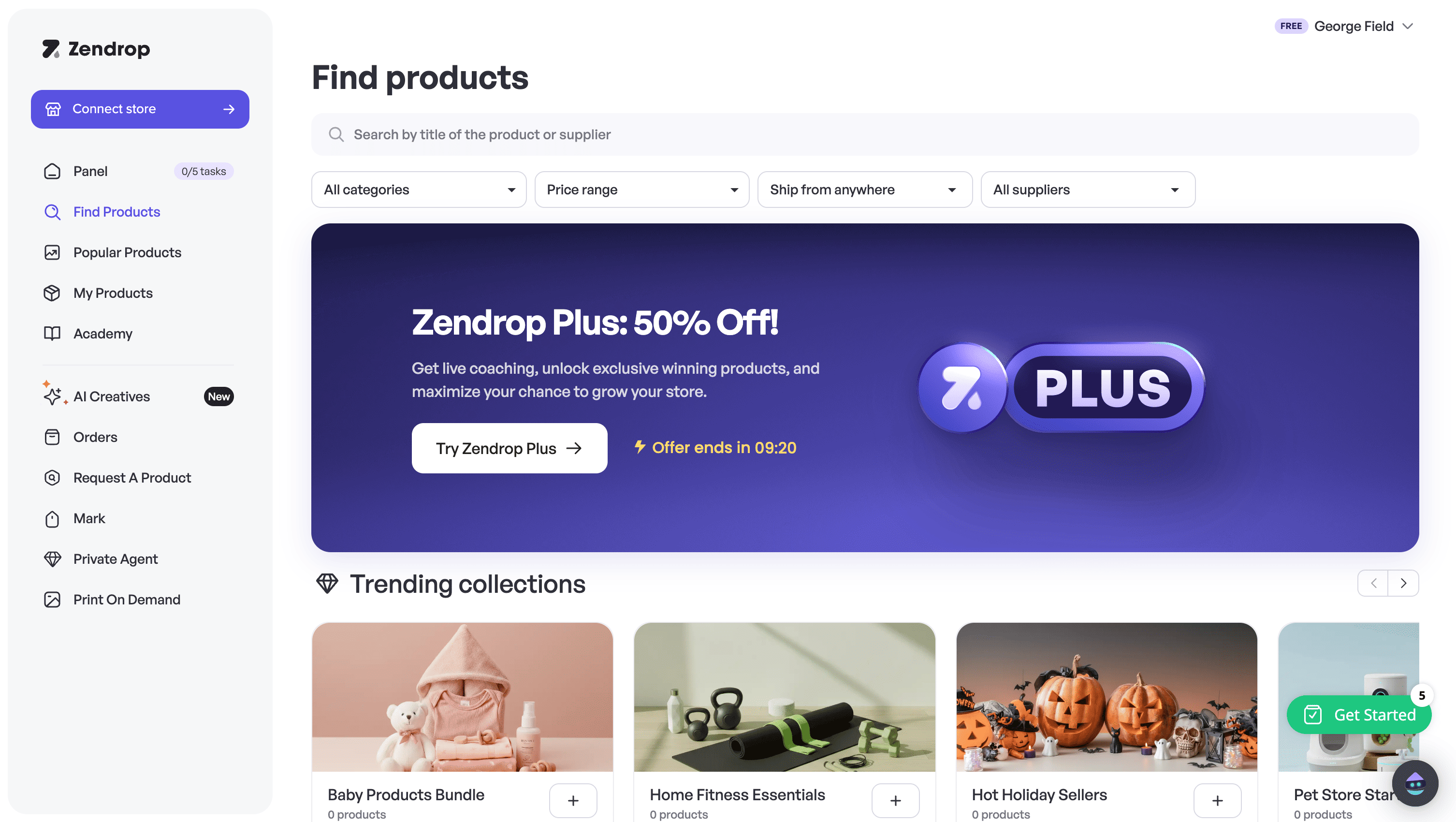
The "Find Products" feature makes it easy to search for and find products to sell. We thought this feature is really useful, especially the metrics that it shows you. You’ll find cost, growth multiples and price.
Who Should Use Zendrop?
Zendrop suits dropshippers at all experience levels, but it's particularly valuable for entrepreneurs who want to build a brand with greater control over product quality and delivery times. If you're willing to pay slightly higher product costs in exchange for reliable suppliers, faster shipping, and quality assurance, Zendrop delivers exceptional value that can significantly reduce customer service headaches and boost repeat purchase rates.
Honestly, Zendrop was probably my favourite, it really does feel premium and offers a lot of what you need from a good supplier platform.
Try out Zendrop now, its free to get started.
The Pros and Cons of Zendrop
Pros: Seamless Shopify integration, fast US/EU shipping times, branded invoicing, excellent for dropshippers focused on quick delivery
Cons: Higher product costs compared to some competitors, limited supplier variety, better features locked behind paid plans
2. DSers
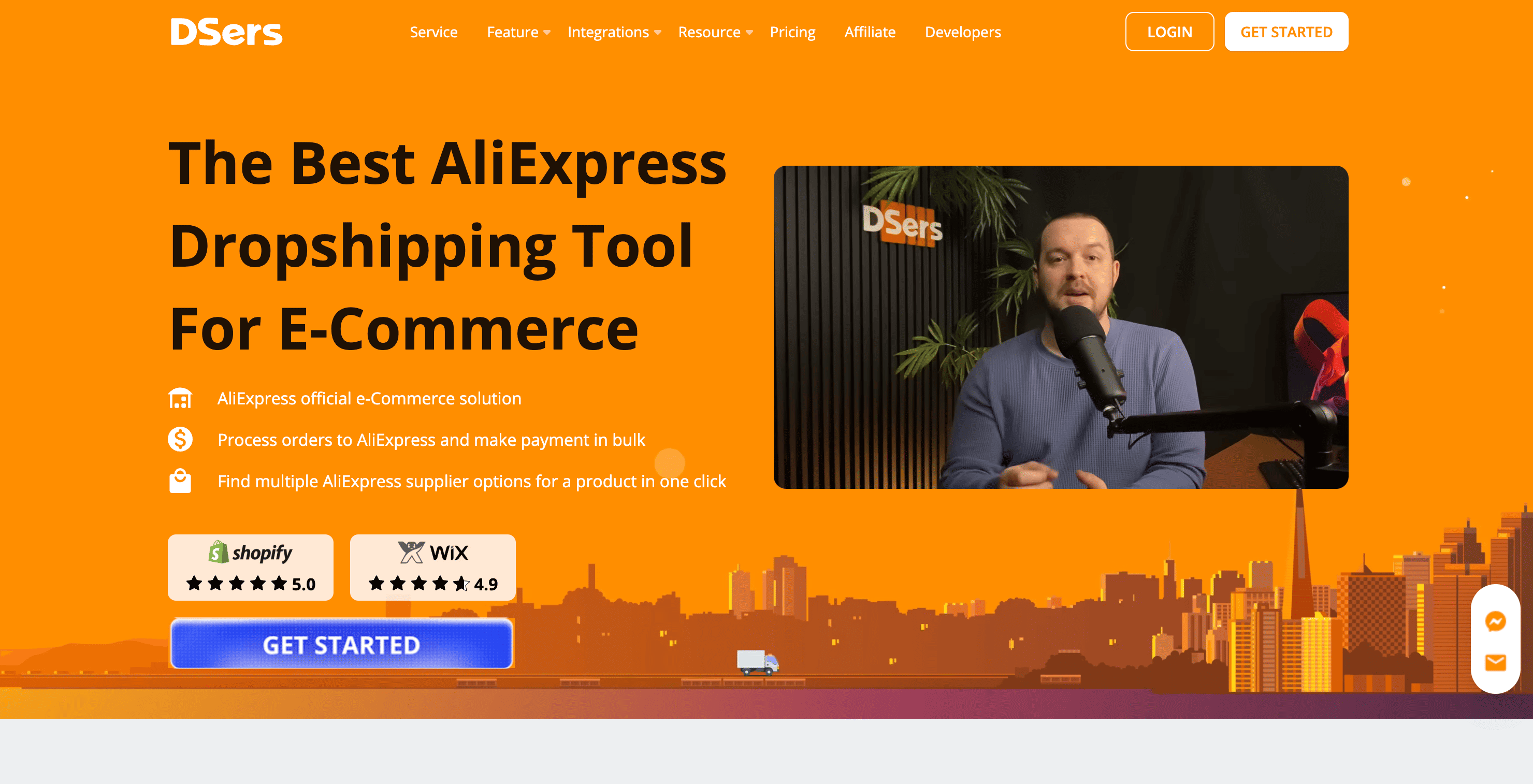
DSers is an official partner of AliExpress, making it the go-to solution for dropshippers who want to source products from the world's largest wholesale marketplace. As the official replacement for Oberlo, DSers has become the dominant AliExpress dropshipping app, offering powerful automation features that help merchants scale their operations efficiently.
Bulk Order Processing That Saves Hours
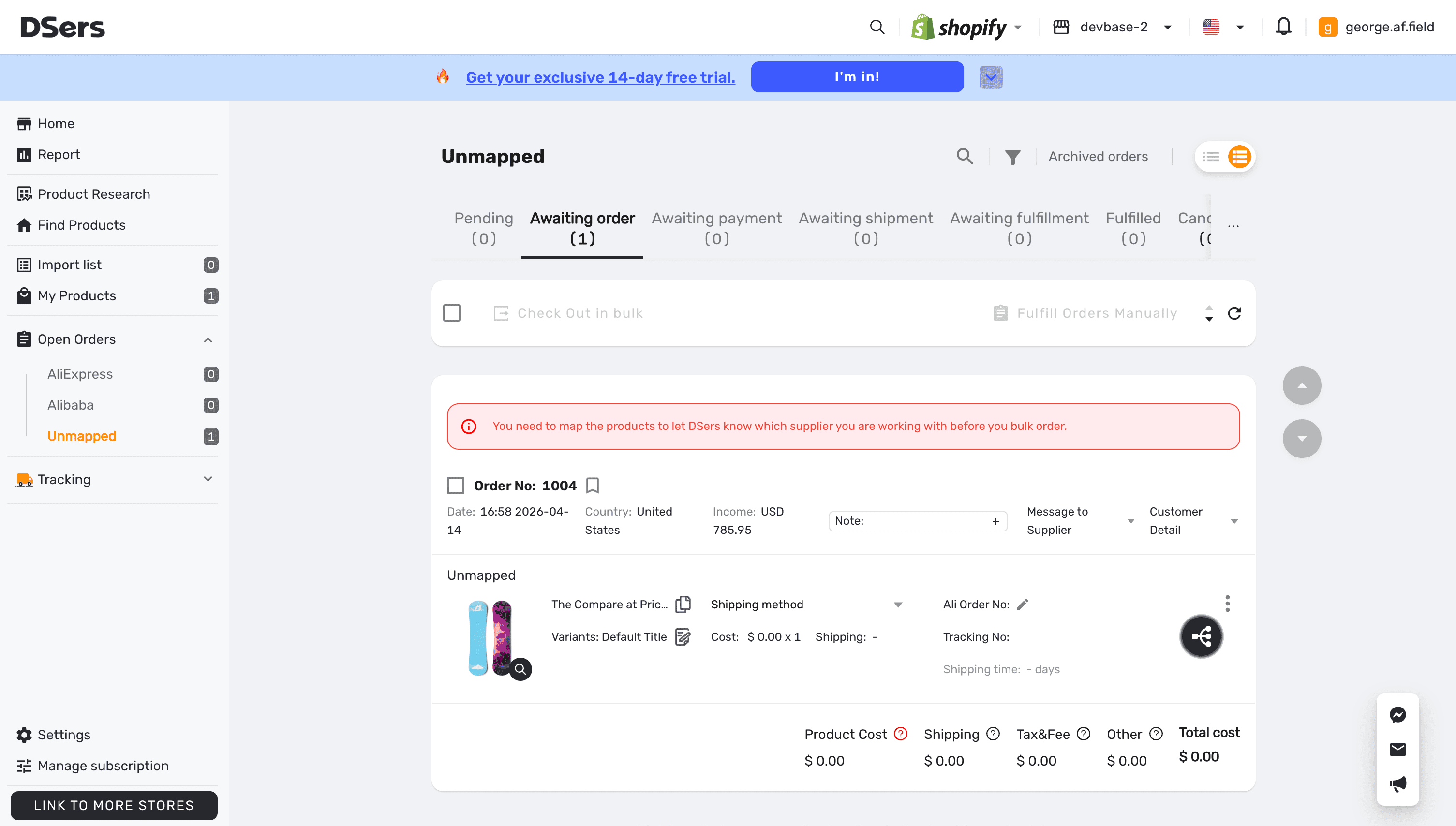
One of DSers' standout features is its ability to place hundreds of orders to AliExpress in seconds. Instead of manually processing each customer order individually, users can place all new orders with just a few clicks. This bulk ordering capability not only saves significant time but also helps minimize shipping expenses by allowing you to consolidate orders and optimize shipping routes.
Pricing Plans for Every Business Stage
DSers offers flexible pricing to accommodate dropshippers at different growth stages. The platform includes a free Basic plan that's perfect for beginners testing the waters. As your business grows, you can upgrade to paid tiers: the Advanced plan at $19.90/month, Pro plan at $49.90/month, or Enterprise plan at $499/month. DSers also provides a 14-day trial for paid features, allowing you to test premium capabilities before committing.
Smart Supplier Optimisation
DSers helps you make informed sourcing decisions with its supplier optimisation tools. The platform allows users to easily find alternative suppliers for the same product, compare prices, and identify the best options. This feature is invaluable for maintaining competitive pricing and ensuring reliable fulfillment.
Seamless Order Tracking and Oberlo Migration
Order management is effortless with DSers, as it automatically syncs order status and tracking numbers from AliExpress to your Shopify store. For merchants transitioning from Oberlo, DSers offers a data migration solution that makes the switch quick and painless, preserving your product data and supplier connections.
Our Thoughts
In all honestly we thought DSers was a solid platform, all be it with a slightly outdated UI. It is practical though and does seem to offer some great value, especially for those trying to leverage Aliexpress or Alibaba.
You can sign up with a free trial so its worth exploring to see if it fits your needs.
The Pros and Cons of DSers
Pros: Official AliExpress partnership, powerful bulk processing, free plan available, excellent for high-volume stores
Cons: Limited to AliExpress suppliers, free plan has restrictions, learning curve for advanced features
If you are looking for a guide on how to use DSers, here is an awesome video that we recommend you giving a watch.
3. Spocket
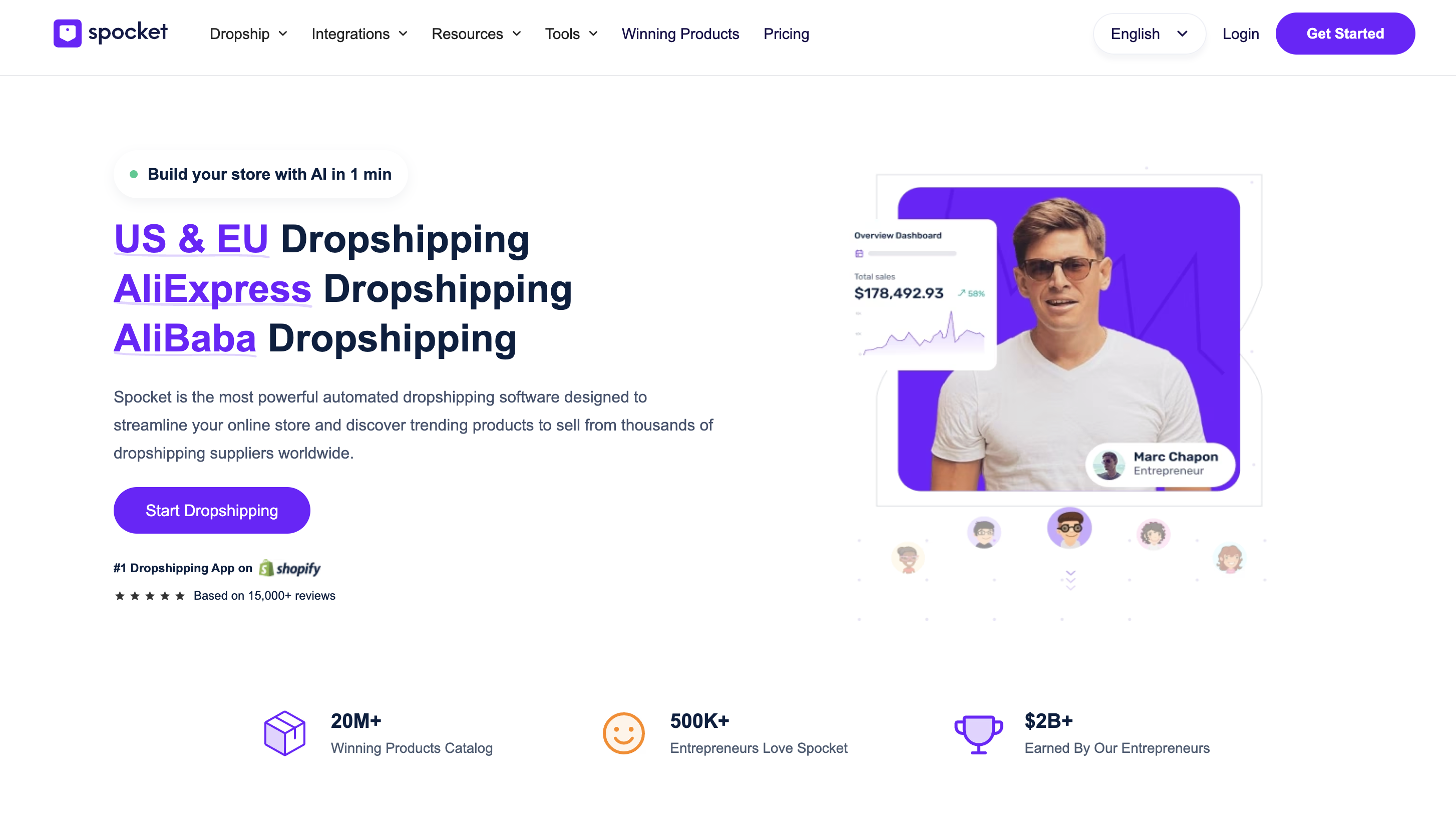
Spocket has decided to go down the quality over quantity route. Unlike platforms that primarily connect merchants with Asian suppliers, Spocket focuses on suppliers based in the United States and European Union, with over 70% of its supplier network located in these regions. This strategic focus delivers tangible benefits for merchants targeting Western markets, particularly those selling premium products in categories like home decor, fashion, and accessories.
Shipping Speed and Product Quality
The geographical advantage translates directly into customer satisfaction. Spocket's average shipping time is 3-5 business days to US addresses, a dramatic improvement over the 15-45 day wait times typical of Chinese suppliers. This speed matters—customers increasingly expect Amazon-level delivery, and anything beyond 7 days can trigger negative reviews and chargebacks. To maintain quality standards, Spocket vets each supplier through a rigorous process, reportedly rejecting 90% of supplier applications.
On the topic of shipping, we recommend trying out these 8 shipping apps for managing shipping costs with your shopify store.
Branded Invoicing and Professional Touch
Branded invoicing capabilities are available in the Pro plan and higher tiers, allowing merchants to include personalised notes and customer names on invoices. This feature enhances brand memorability and creates a more professional unboxing experience—critical for building customer loyalty in competitive markets.
Pricing Structure
Spocket offers four paid tiers with a 7-day free trial:
- Starter Plan: $24/month for up to 25 products, including real-time inventory updates and tracking numbers
- Pro Plan: $49/month ($29/month annually) for 250 products, adding branded invoices and premium product access
- Empire Plan: $99/month ($79/month annually) for unlimited products
- Unicorn Plan: $299/month ($115/month annually), including supplier sourcing and bulk checkout
💡 Pro Tip: Order samples from potential suppliers to verify packaging quality, actual shipping times, and product condition before committing to a product line.
Our Thoughts
Its a really awesome product, well rounded and great for merchants targeting US/EU markets with premium products who prioritise fast shipping and brand presentation over rock-bottom prices.
The Pros and Cons of Spocket
Pros: Large supplier network with US and EU suppliers, fast shipping options, branded invoicing available, good product catalog variety
Cons: Higher pricing compared to some competitors, limited free plan features, fewer automation tools than some alternatives
4. AutoDS
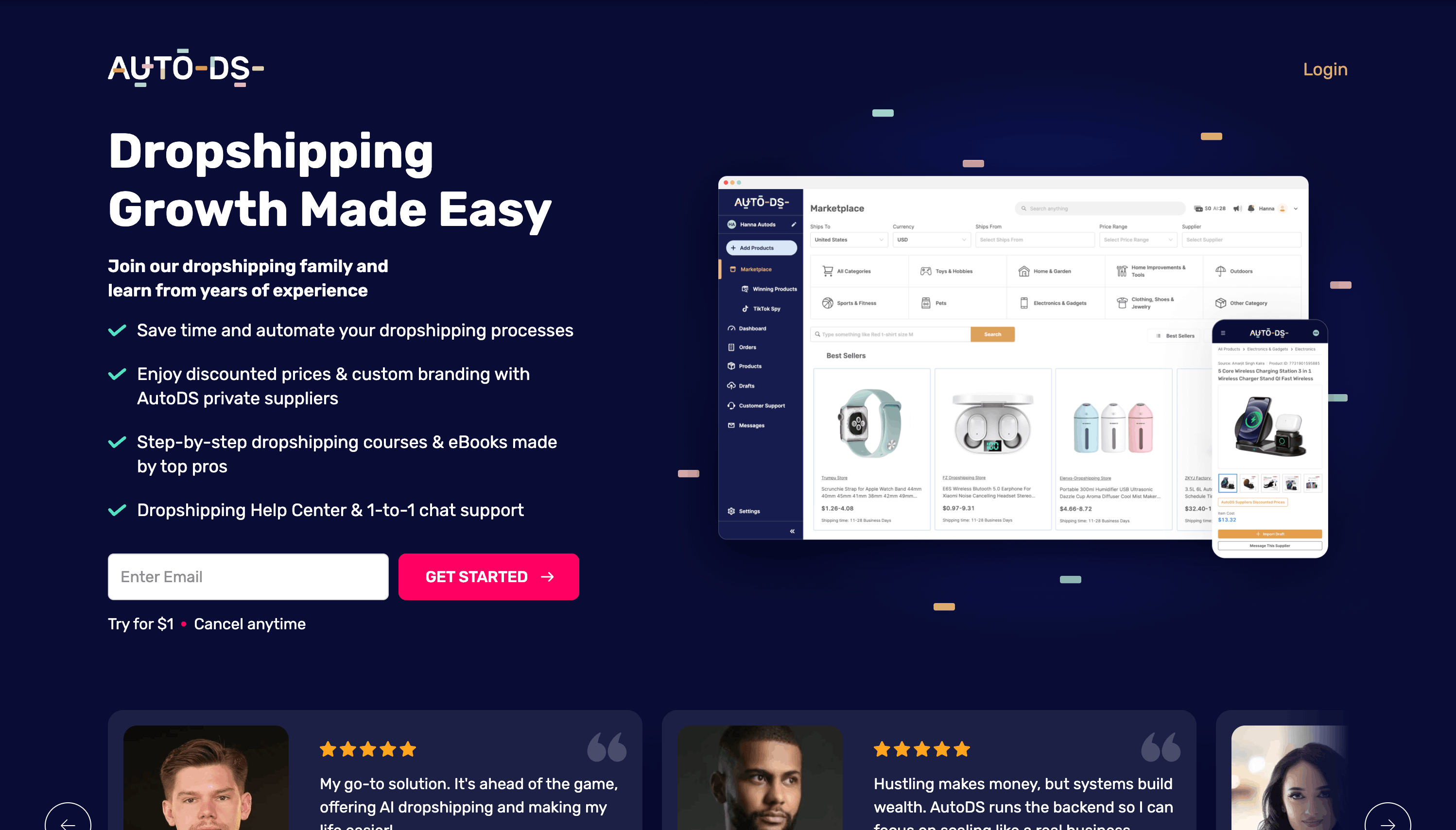
AutoDS stands out as a comprehensive automation powerhouse for dropshippers who need to manage operations across multiple sales channels. The platform supports Shopify, eBay, Etsy, and Facebook Marketplace, allowing you to control everything from a single dashboard. This centralized approach eliminates the hassle of juggling multiple logins and keeps inventory, orders, and tracking fully synchronized across all your stores.
Real-Time Monitoring That Protects Your Margins
One of AutoDS's most valuable features is its automatic price and stock monitoring, which checks suppliers for updates every hour. When a supplier changes their price, AutoDS instantly updates your listings based on your predefined markup rules. If products go out of stock, the system can automatically pause listings or set quantities to zero, preventing you from selling items you can't fulfill.
The automatic price optimization feature takes this further by adjusting prices based on product performance—increasing prices for fast-selling items while lowering them for slower movers. You can set minimum and maximum profit margins, and the system even applies psychological pricing strategies like .99 endings on Shopify.
Extensive Supplier Network and Automation Rules
AutoDS integrates with over 25 suppliers, including AliExpress, Amazon, Walmart, CJ Dropshipping, and Banggood. This multi-supplier approach gives you flexibility in sourcing while maintaining centralized control. The platform's advanced automation rules let you customize pricing per supplier, setting different profit margins, fees, and rounding rules for each source.

Setup and Learning Curve
While AutoDS offers powerful features, new users should expect an initial learning period. The platform provides comprehensive video tutorials, detailed documentation, and responsive customer support through live chat and email. Most users can configure basic automation within their first day, then gradually adopt more advanced features as they grow comfortable with the system.
Pricing: AutoDS offers tiered plans starting around $19.90/month, with higher tiers unlocking more products, stores, and advanced features. A trial period is available to test the platform before committing but be aware that the trial is $1.
Our Thoughts
As a product offering, AutoDS does provide you with a great base to start. They have a nice UI and a good feel when using the platform but, as we discussed earlier, it does have a steeper learning curve compared to the other shopify dropshipping apps on this list.
The Pros and Cons of AutoDS
Pros: Large supplier network including AliExpress, Amazon, and Walmart, powerful automation tools for price and stock monitoring, automatic order fulfillment, user-friendly interface, extensive product importing options, good product research tools
Cons: Higher subscription cost, steep learning curve for beginners, occasional sync delays with suppliers, some advanced features locked behind higher-tier plans, customer support can be slow at times
5. Modalyst
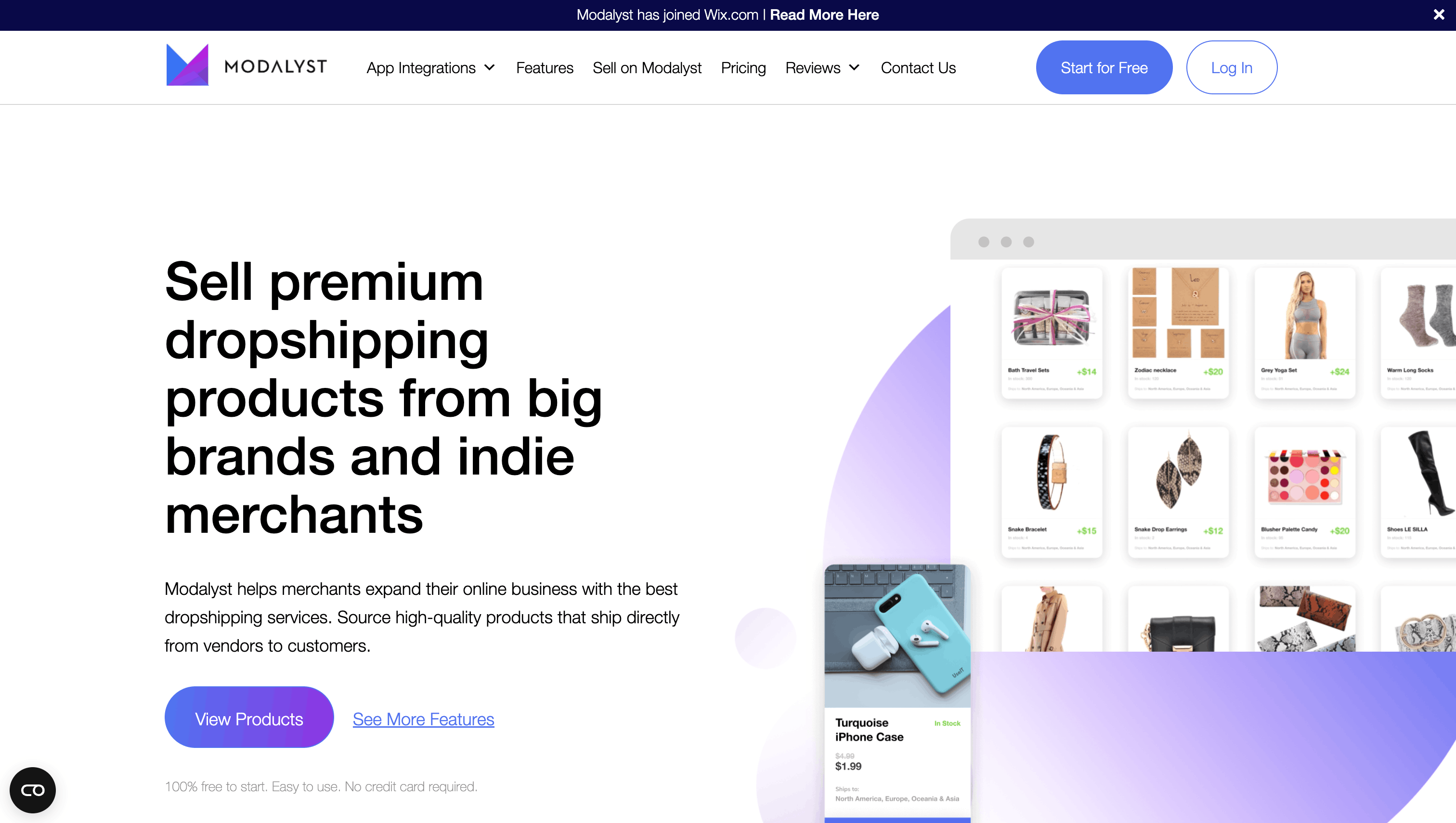
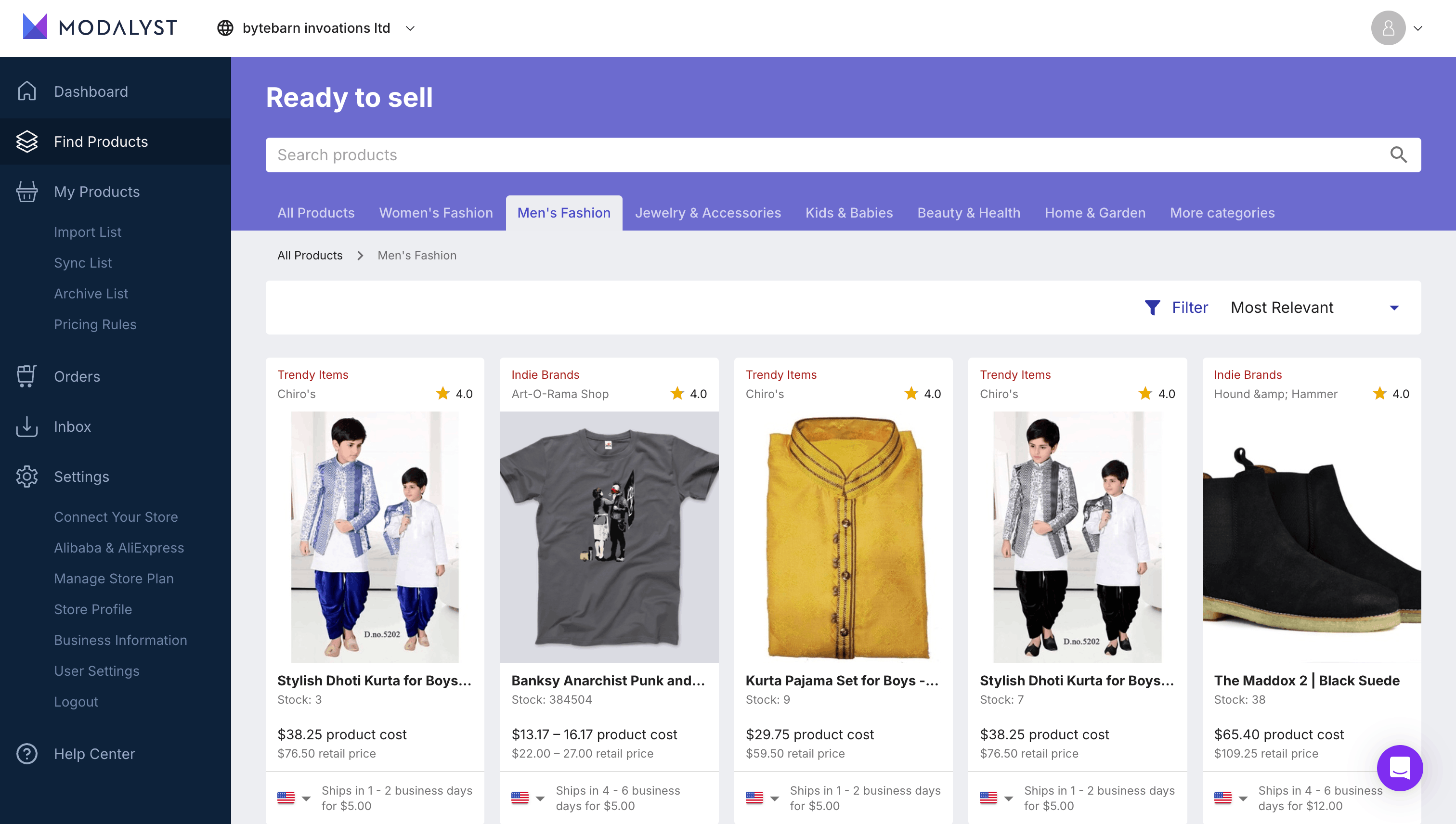
Modalyst connects retailers with suppliers offering a wide range of premium, independent, and name-brand products, making it an excellent choice for dropshippers who prioritize quality over quantity. Unlike platforms that focus on mass-market items, Modalyst provides a curated selection of eco-friendly and ethical products that appeal to conscious consumers.
Premium Supplier Network
One of Modalyst's standout features is its focus on US and European suppliers, which results in faster shipping times compared to Asian-based alternatives. Suppliers on Modalyst typically provide shipping times of 2-7 business days for domestic US orders, significantly reducing customer wait times and refund rates. This makes Modalyst ideal for retailers targeting customers in North America and Europe.
The platform maintains strict quality standards through its vetting process. Modalyst screens suppliers before adding them to their marketplace, ensuring that quality control remains a key focus for the platform. This rigorous approach helps protect your brand reputation and minimizes product-related customer complaints.
Pricing and Plans
Modalyst offers three pricing tiers to accommodate different business sizes:
- Hobby Plan (Free): 25% per sale transaction fee, ideal for testing the platform
- Start-Up Plan: $35/month, allows 250 products, with a 5% per sale transaction fee
- Pro Plan: $90/month, allows unlimited products, with a 5% per sale transaction fee
The commission structure means your actual costs scale with your sales volume, making it accessible for beginners while remaining viable for growing businesses.
Niche Market Focus
Modalyst is ideal for niche, low-volume stores with a premium focus. The platform excels in offering sustainable, eco-friendly, and ethically sourced items that command higher margins. This specialization allows you to differentiate your store from competitors selling generic products, building a loyal customer base willing to pay premium prices for quality and authenticity.
Pros:
- Fast shipping from US/EU suppliers
- Curated premium product selection
- Strong quality control measures
- Flexible pricing plans
Cons:
- Higher transaction fees on free plan
- Smaller product catalog than mass-market platforms
- Premium focus may limit high-volume opportunities
One thing to note about Modalist is that it recently got acquired by Wix, a competitor to shopify, so be aware of this as of course, its likely it will now prioritise the Wix platform.
Our Thoughts
Modalyst is a great entry point but, if we are being honest it was not our favourite. Firstly, as a platform it seemed to peak about 5 years ago but the functionality and feature set does not seemed to have kept up with the times.
They do have a very generous free tier though so it might be worth giving it a go if you are getting started with dropshipping on shopify for the first time.
CJdropshipping
CJdropshipping has emerged as a comprehensive dropshipping solution for Shopify merchants seeking global reach combined with professional branding capabilities. With its extensive infrastructure and value-added services, this platform caters to businesses looking to scale their operations while maintaining quality control and faster delivery times.
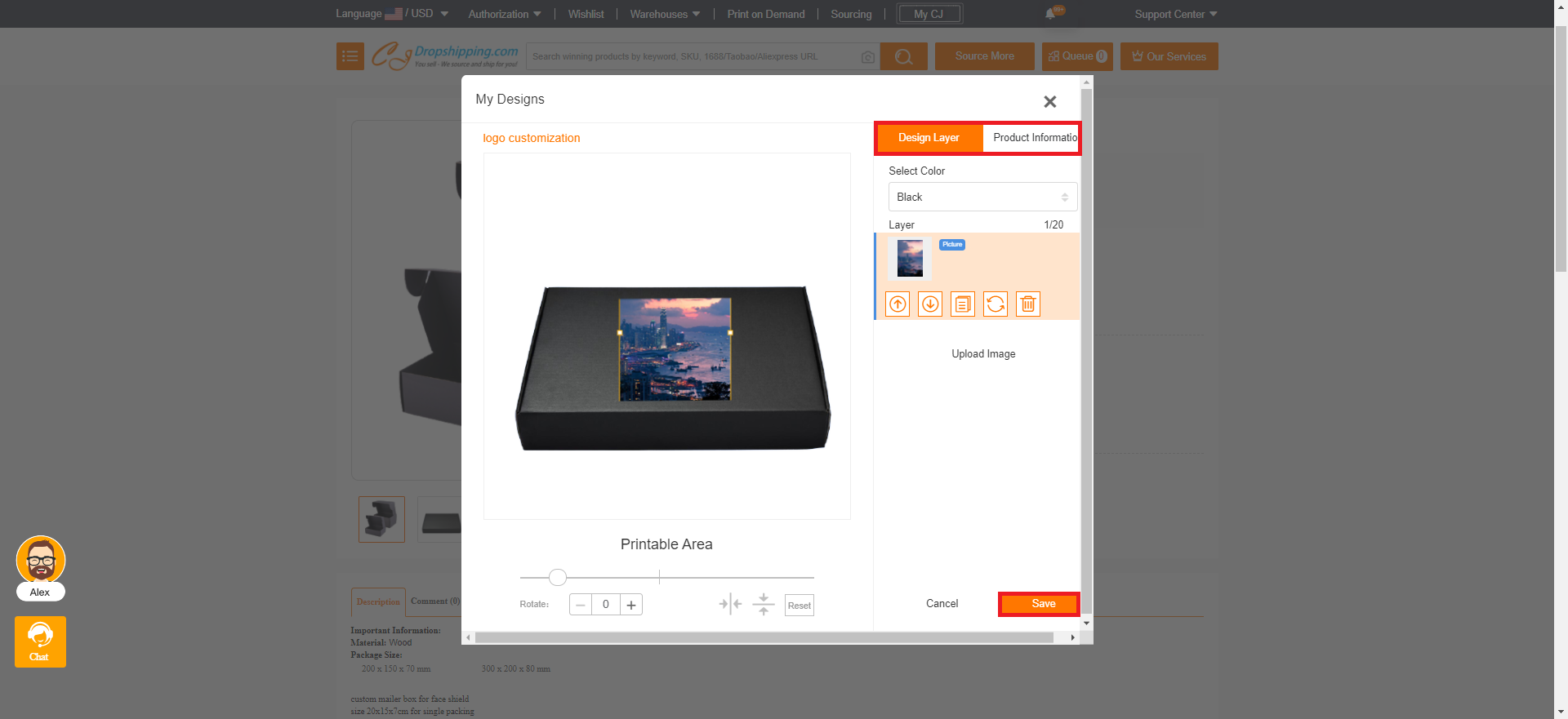
CJdropshipping's platform interface streamlines product sourcing and order fulfillment for Shopify stores.
Global Warehouse Network
One of CJdropshipping's standout features is its extensive warehouse network spanning multiple continents. The platform operates fulfillment centers in the U.S., Germany, Australia, Canada, the U.K., France, and Italy, enabling merchants to serve customers across major markets with reduced shipping times. This strategic positioning allows faster domestic delivery from US warehouses, significantly improving customer satisfaction compared to traditional China-only shipping.
Custom Branding and Packaging
CJdropshipping excels in helping merchants build distinctive brand identities through custom packaging services that include personalized logos and branding elements. Beyond packaging, the platform offers Print on Demand (POD) services, allowing merchants and their customers to add custom designs directly to products. This white-label approach enables businesses to create a professional, branded unboxing experience without maintaining inventory.
Product Sourcing Services
The platform connects merchants to suppliers worldwide across diverse product niches, from electronics to fashion and beyond. CJdropshipping's big-data system recommends trending products and provides access to thousands of items at factory prices, helping merchants identify profitable opportunities while maintaining competitive pricing.
Pricing Model and Fees
CJdropshipping operates on a freemium model with a free plan that embeds costs in product pricing and fulfillment fees. For merchants requiring advanced features, paid plans include Plus ($15.99/month), Prime ($19.99/month), and Advanced ($59.99/month), each offering progressively more sophisticated tools and benefits.
Quality Control and Shipping
CJdropshipping addresses quality concerns by offering product quality inspections as a value-added service, helping merchants maintain standards before products reach customers. Orders from US warehouses typically deliver within 3-7 business days, while international warehouse shipping times vary by location but remain competitive for regional delivery.
Pros: Global warehouse network, custom branding options, free plan available, quality inspection services, POD capabilities
Cons: Shipping times vary by warehouse location, paid plans required for advanced features
Printful
Printful stands out as a leading print-on-demand solution for Shopify merchants who want to sell custom-branded products without holding inventory. The platform operates on a pure POD model where production and fulfillment only occur after a customer places an order, eliminating the need for upfront inventory investments. This risk-free approach makes it particularly attractive for entrepreneurs testing new product ideas or building branded merchandise lines.
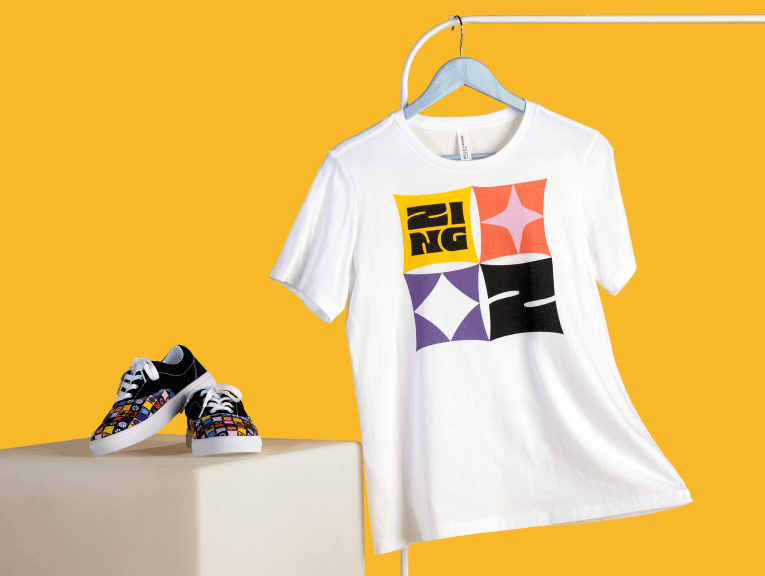
Printful's print-on-demand platform streamlines custom product creation and fulfillment for Shopify stores.
Extensive Product Catalog and Customization
Printful offers an impressive range of products including clothing, prints, home décor, and accessories. Popular items include t-shirts, sweatpants, leggings, tote bags, backpacks, mugs, phone cases, and framed posters. Beyond product variety, the platform provides robust branding options such as custom clothing labels, branded packaging inserts, and even graphic design services to help merchants create professional-looking products.
The built-in design tools simplify the creative process significantly. Printful includes a mockup generator and logo maker that allow merchants to visualize products before listing them, ensuring designs look exactly as intended.
Pricing Structure and Profit Potential
Printful charges no monthly subscription fees—costs only apply to fulfillment and shipping. This pay-per-order model keeps overhead minimal. Product pricing varies by item, with merchants adding their own markup to determine retail prices. For example, selling a Printful hardcover notebook might cost around $20 in total expenses, and with a 30% profit margin, you'd price it at approximately $28.60. High-volume sellers benefit from bulk discounts of up to 55%, improving margins significantly.
Production Speed and Quality Assurance
Products ship globally and are typically ready within 2-5 business days from facilities in the US, Mexico, and Europe, with 50% of orders fulfilled in under three days. Standard US shipping starts at just $3.99 for a single product.
Quality remains consistently high, with Shopify merchants rating Printful 4.8/5 stars across 2,400+ reviews. Users particularly praise the apparel quality, printing consistency, user-friendly interface, and seamless Shopify integration—making Printful a reliable choice for merchants prioritizing product quality and customer satisfaction.
Trendsi

Trendsi specializes in fashion dropshipping with US-based inventory and fast shipping.
For Shopify store owners focused on fashion and apparel, Trendsi offers a specialized dropshipping platform that connects sellers with on-trend clothing, accessories, and lifestyle products. Unlike the print-on-demand model covered with Printful, Trendsi operates as a traditional dropshipping supplier with ready-to-ship inventory.
Fashion-Forward Product Catalog
Trendsi's catalog spans multiple fashion categories, including women's, men's, and kid's clothing and accessories, as well as beauty and lifestyle items. The platform partners with trusted wholesale brands such as Judy Blue, Risen, Zenana, and Double Take, while also offering white-label products suitable for custom branding. Each product comes with professional images and descriptions, making it easy to import listings directly into your Shopify store.
US-Based Inventory Benefits
One of Trendsi's strongest advantages is its focus on US-based inventory, which translates to significantly faster shipping times compared to overseas suppliers. Most US orders arrive in 2–5 business days, while overseas products are delivered in 5-10 business days within the US. This rapid fulfillment helps fashion retailers meet customer expectations and reduce cart abandonment.
Free to Start, Easy to Scale
Trendsi offers a completely free plan that allows users to list up to 500 products without any upfront costs or monthly fees. You only pay for products and shipping after making a sale, eliminating financial risk for new sellers. For those needing advanced features, Trendsi Pro provides additional capabilities at a premium tier.
💡 Pro Tip: Trendsi works directly with factories to ensure swift restocking of bestselling items, helping you avoid stockouts on trending products.
Pros:
- Zero upfront costs with free plan
- Fast 2-5 day US shipping
- Curated fashion-forward inventory
- 7-day free return policy
Cons:
- Limited to fashion and lifestyle niches
- Smaller product range than general dropshipping platforms
- Less customization than print-on-demand services
I need to search for more specific information about Syncee's features, pricing details, supplier vetting process, and product categories to provide a comprehensive review.Now I have comprehensive information about Syncee. Let me create a detailed review section covering all the key points.
Syncee
Syncee is a collective dropshipping app and wholesale marketplace where retailers find new complementary products to sell from vetted suppliers from the USA, CA, UK, EU, AU, and worldwide. Unlike the fashion-focused Trendsi covered earlier, Syncee offers a broader product selection across multiple categories, making it ideal for retailers looking to diversify their store offerings.
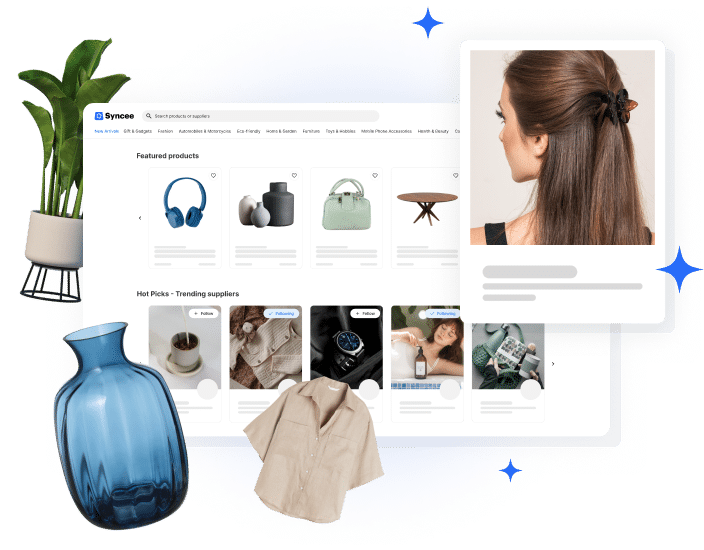
Syncee's premium dropshipping marketplace connects retailers with verified global suppliers.
Global Supplier Marketplace
The core of the platform is the Syncee Marketplace, which hosts over six million products across hundreds of categories, ranging from fashion to electronics. The marketplace features 12,000+ brands globally, with suppliers in the US, CA, EU, UK, AU, and worldwide. Categories range from automotive, beauty products, eco-friendly items, to food and drink, and more, offering virtually limitless possibilities for dropshipping businesses.
Automated Data Synchronization
Syncee automatically syncs product data, including inventory levels and pricing, and if a supplier changes a price or runs out of stock, your store updates instantly to prevent overselling. Syncee ensures fresh product data and automates the order and tracking synchronization. This automation eliminates manual inventory management, allowing retailers to scale without worrying about overselling or outdated product information.
Supplier Vetting Process
Suppliers must comply with policies and applicable laws and go through a deep vetting process before they could go live on the platform. Syncee is committed to curating a diverse and high-quality selection of products, with established specific criteria that potential suppliers must meet in order to list their products. Unlike open marketplaces where anyone can sell, Syncee vets its suppliers to ensure that partners have physical stock and a proven track record of reliable shipping.
Pricing Tiers and Features
Syncee offers a Free plan for browsing products, with paid plans starting at $39.99/month and going up to $99.99/month for higher import limits, and Shopify users can get a 3-day free trial plus $1/month for the first 3 months. The pricing is based on the product number, not variant SKU. Unlike many competitors, Syncee does not take a percentage of sales, with users only paying their monthly subscription fee and the wholesale cost to the supplier.
Integration Capabilities
Syncee has an integration with all the biggest e-commerce platforms including Shopify, Wix, WooCommerce, BigCommerce, Squarespace, and more. New for 2026, the Syncee GPT and AI tools help optimize stores faster, with AI that can generate product descriptions, SEO tags, and titles, ensuring imported products don't look like "copy-paste" jobs.
Pros:
- Massive product range combined with lack of transaction fees
- No inventory risk and no minimum orders
- 24/7 support available via chat or email for free
Cons:
- The free plan does not allow importing any products
- Some "Premium" suppliers require higher-tier plans for access
- Return policies are set by individual suppliers, not Syncee
How to Choose the Right Shopify Dropshipping App
Selecting the right dropshipping app can make or break your Shopify store's success. With dozens of options available, each offering different features, pricing models, and supplier networks, making an informed decision requires careful evaluation of several critical factors.
Assess Your Target Market and Shipping Requirements
Your customer base location should be the foundation of your app selection strategy. If your customers are primarily in North America or Europe, apps with local suppliers like Spocket or Zendrop are crucial for offering competitive shipping times. Conversely, if you're targeting a global audience or prioritizing the lowest product costs, apps integrated with AliExpress (like DSers) might be more suitable, despite potentially longer shipping windows.
The ideal supplier should have fulfillment centers close to your customer base to enable fast shipping, as delivery speed directly impacts customer satisfaction and repeat business. Consider your target market's expectations—North American customers typically expect faster delivery than those in other regions.
Consider Your Budget and Pricing Models
Dropshipping apps utilize various pricing structures that can significantly impact your bottom line. Free plans often have limited features, product limits, or order limits, suitable for beginners or testing, while paid monthly subscriptions can range from $10 to $300+ per month, unlocking advanced features.
Be aware that some apps might charge a small percentage per order on top of a subscription fee. A typical dropshipping store spends $40–$100/month on apps depending on what's needed. Calculate the total cost based on your anticipated sales volume and ensure it aligns with your expected profit margins.
Evaluate Supplier Location and Shipping Times
Shipping speed remains a critical differentiator in e-commerce. When evaluating apps, examine their supplier network carefully. For faster delivery, consider filtering for products with 8-14 day shipping rather than the standard 20-30 day windows common with overseas suppliers.
Pro tip: Choose suppliers labeled "China" over "China (mainland)" since they average 14.9 days vs 20.3 days. As your business grows, once a product proves itself through dropshipping, move it to a US fulfillment center for 2-5 day delivery to maximize customer satisfaction.
Check Product Quality and Niche Alignment
Not all dropshipping apps offer the same product quality or variety. Research whether the app specializes in your niche or offers general products. Order samples before committing to ensure the quality meets your brand standards. Apps like Syncee, mentioned earlier, offer vetted suppliers, which can save you time in quality assessment.
Stack Apps In Your Store
Stacking shopify apps is really useful practice for increasing your conversions, acquiring new customers and ensuring your business grows. SEO Apps help you gain customers, shipping apps help you cut shipping costs, there is an assortment of apps available to you and all are perfect for enabling you to increase the profitability of your store.
Review Automation Features and Scalability
Modern dropshipping apps can automate product imports, inventory updates, order forwarding to suppliers, tracking number sync, and even dynamic pricing. While basic automation (auto-forwarding orders) is available in most apps, advanced automation requires tools like Spark Shipping or AutoDS.
The more you automate, the more time you free up for marketing and growth. Look for apps that offer multi-supplier routing rules and real-time inventory synchronization to prevent overselling.
Test Integration Quality and Ease of Use
Each quality app connects directly to Shopify, allowing you to import products and start selling within minutes. Before committing, test the app's interface, product import process, and order management system. A steep learning curve can delay your launch and create operational headaches.
Consider Customer Support and Resources
Investing in a paid app could offer greater long-term value if you're aiming for more features, a wider product selection, and better customer support. Evaluate whether the app offers live chat, email support, comprehensive documentation, and video tutorials. When issues arise—and they will—responsive support can mean the difference between a minor hiccup and lost revenue.
Key Features to Look for in Dropshipping Apps
Building on the selection criteria discussed earlier, understanding the specific features that separate exceptional dropshipping apps from mediocre ones is crucial for your success. The right combination of automation, data management, and analytical tools can mean the difference between a thriving business and constant operational headaches.
Automated Order Fulfillment
At the core of any quality dropshipping app is automated order fulfillment that eliminates manual data entry. When customers place orders, the app instantly forwards details to suppliers who handle packing and shipping. This seamless process allows automated systems to process hundreds of orders simultaneously, with automated fulfillment shipping orders up to 30% faster than manual processes. Leading platforms like Zendrop, DSers, and AutoDS connect directly to Shopify, ensuring your orders reach suppliers immediately without bottlenecks.
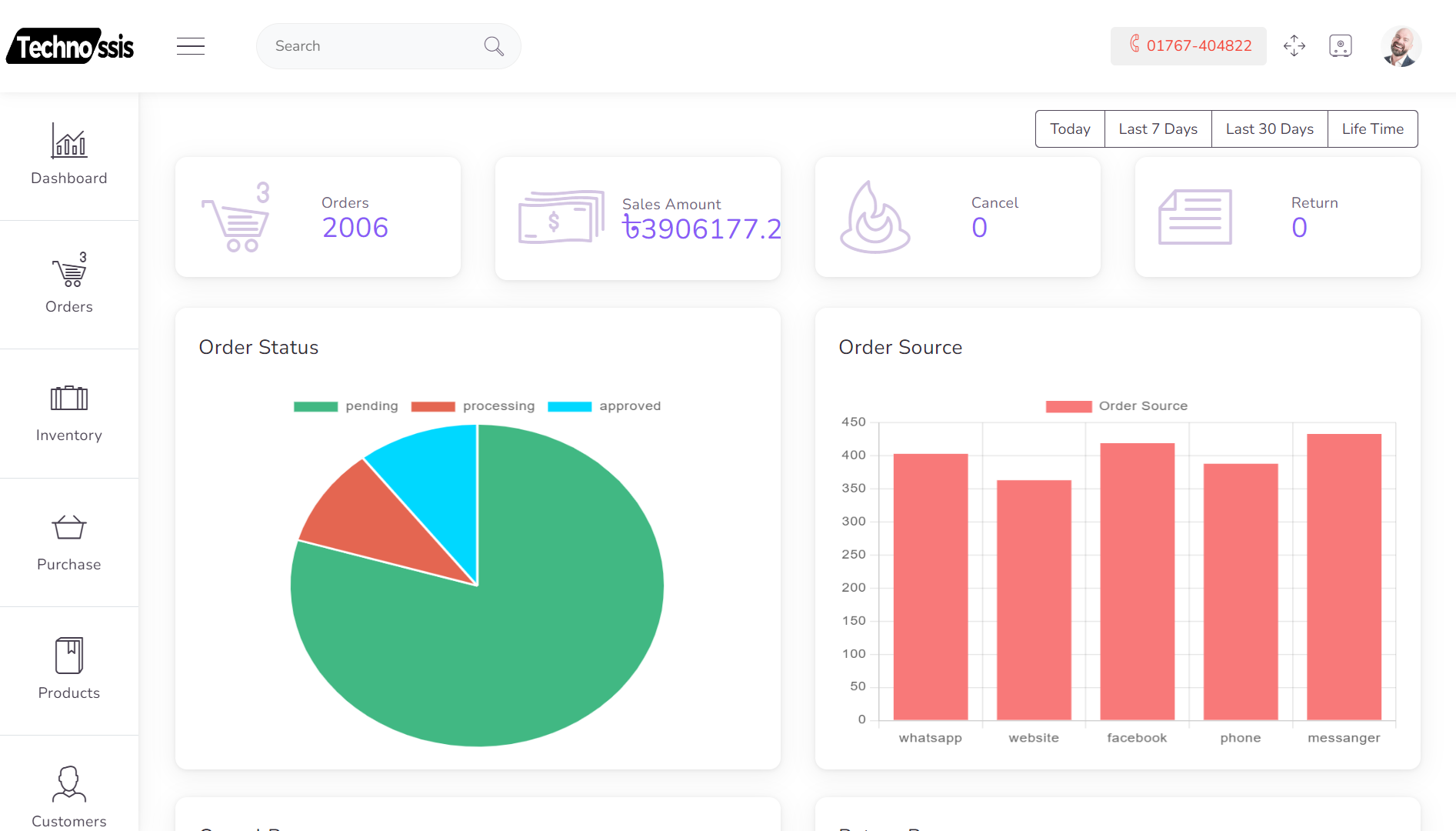
Modern dropshipping dashboards provide centralized control over order fulfillment, inventory, and performance metrics.
Real-time Inventory Synchronization
Nothing damages customer trust faster than selling products that aren't actually available. Real-time inventory synchronization prevents overselling and reduces the risk of order cancellations by establishing direct connections with supplier databases. The best apps update inventory counts automatically whenever stock levels change—some refresh data continuously while others sync every few hours. This feature is critical considering that 40% of customers who experience an order cancellation due to overselling never purchase from that brand again. Premium apps like Spocket achieve 98% inventory accuracy through multiple daily updates.
Product Import and Management Tools
Efficient product import capabilities allow you to automatically add products to your store from vast supplier catalogs. Quality apps provide access to millions of products from a global network of suppliers, enabling rapid niche testing and catalog diversification. Advanced platforms include product description generators that create SEO-friendly content, saving hours of manual writing while optimizing your listings for search engines.
Pricing Automation and Profit Calculators
Maintaining competitive pricing while protecting margins requires sophisticated tools. Look for apps with automatic pricing markup features and pricing monitoring that tracks competitor prices and market trends. Advanced systems can automatically adjust prices based on predefined rules, such as maintaining specific profit margins or matching competitor pricing within certain thresholds, ensuring you remain competitive without constant manual oversight.
Supplier Communication and Tracking Updates
Streamlined supplier relationships depend on centralized communication platforms that consolidate messages and order inquiries. Additionally, automated order tracking updates keep customers informed throughout the shipping process, reducing support inquiries and building trust through transparency.
Analytics and Reporting Capabilities
Data-driven decision making separates successful dropshippers from those who struggle. Sophisticated analytics tools track performance metrics across your entire product catalog, with dashboards that reveal which products generate the highest profits and identify trends in customer purchasing behavior. These insights enable you to double down on winners, eliminate underperformers, and spot emerging opportunities before competitors.
Common Mistakes to Avoid When Using Dropshipping Apps
While the features discussed earlier can streamline your dropshipping operations, success ultimately depends on how you implement and manage these tools. Even the most sophisticated apps won't protect you from critical operational mistakes that can damage your reputation and bottom line. Understanding these common pitfalls will help you build a sustainable dropshipping business that delivers consistent customer satisfaction.

Avoiding common dropshipping mistakes is essential for building customer trust and long-term profitability.
Not Testing Product Quality Before Selling
One of the most damaging mistakes is listing products without personally evaluating them. Order samples to verify quality, measure shipping times, and experience the unboxing before offering items to customers. Supplier photos often misrepresent actual products, and a defect, wrong size, or low-grade material can lead to unhappy buyers and negative feedback. Since you have no direct control over product quality, this firsthand evaluation is your only opportunity to ensure standards are met.
Ignoring Shipping Times and Customer Expectations
Shipping delays represent a critical vulnerability in dropshipping. While 74% of online shoppers now expect delivery within two days, products shipped from international locations can take significantly longer to arrive. Shipping from China can take 15-30 days, and a quarter of products take three weeks or more. Be transparent about delivery timeframes on product pages to set realistic expectations and avoid customer dissatisfaction.
Failing to Monitor Inventory Levels
Dropshipping inventory management involves tracking, syncing, and controlling stock availability across third-party suppliers in real-time. Without proper monitoring, clients will be informed repeatedly that the product they ordered is out of stock, leading to cancellations and damaged trust. Leverage the real-time inventory synchronization features covered in the previous section to automate this critical process.
Neglecting Customer Service
Since you don't control fulfillment, exceptional customer service becomes your primary competitive advantage. Respond within 2 hours to inquiries, handle complaints proactively, and over-deliver on policies. Fast support often decides whether customers return or leave 1-star reviews. Your responsiveness directly impacts customer retention and your store's reputation.
Overlooking Profit Margin Calculations
Don't forget to account for all costs when pricing products. Beyond the supplier's price, factor in transaction fees, app subscriptions, advertising costs, and potential returns. Use the pricing automation and profit calculators mentioned earlier to ensure each product generates sustainable margins after all expenses.
Not Diversifying Supplier Sources
Relying on a single supplier creates significant risk. If they experience stock shortages, quality issues, or business disruptions, your entire operation suffers. Establish relationships with multiple suppliers for your best-selling products to ensure continuity and leverage competitive pricing.
Frequently Asked Questions About Shopify Dropshipping Apps
Now that you're aware of the common pitfalls to avoid, let's address the most frequently asked questions about Shopify dropshipping apps to help you make informed decisions for your business.
Are dropshipping apps free to use?
Many dropshipping apps offer free plans, though features and limitations vary significantly. DSers' free plan supports up to 3,000 products and 3 Shopify stores with bulk ordering capabilities, making it genuinely functional for beginners. Similarly, CJ Dropshipping is completely free with no monthly subscription—you only pay per order for product cost and shipping.
However, other "free" plans from apps like Zendrop, Modalyst, and Spocket often have significant limitations that require upgrading to unlock full functionality. Paid monthly subscriptions can range from $10 to $300+ per month, depending on the features, product limits, and premium support you need.
Can I use multiple dropshipping apps on one Shopify store?
Yes, multiple dropshipping apps can be used simultaneously on your Shopify store. The key requirement is that each app must use unique SKU numbers to prevent inventory tracking issues.
To implement this successfully:
- Assign distinct SKU numbers for each supplier (consider prefixing with supplier IDs)
- Maintain proper inventory tracking to indicate which supplier fulfills each product
- Include shipping costs in your product pricing for accurate profit calculations
How do dropshipping apps handle order fulfillment?
Dropshipping apps streamline the entire fulfillment process through automation. Once a customer places an order, apps automatically forward orders to suppliers, who then ship products directly to your customers. This eliminates manual order entry and inventory management headaches.
The automation includes product imports, real-time inventory syncing, and instant order processing the moment customers check out—allowing you to focus on marketing and customer service rather than logistics.
What are the typical profit margins with dropshipping apps?
Dropshipping businesses typically achieve profit margins between 15% and 20%, though many successful dropshippers reach 15-45% depending on their niche and competition level. A good profit margin for dropshipping is generally over 20%.
Calculate your margins using this formula: ((Revenue - Total Costs) / Revenue) × 100%. Remember to factor in all costs—product prices, shipping, transaction fees, marketing expenses, and platform fees—to get an accurate picture of your profitability.
Do I need technical skills to use dropshipping apps?
No, technical skills are not needed to start dropshipping. Shopify and most dropshipping apps are designed for users without coding experience. The basic skills required are easily learned through tutorials and documentation.
If you need advanced customization or design work, you can hire professionals on platforms like Fiverr for specific tasks. Some tools even offer one-click store builders that handle the technical setup automatically.
How long does shipping take with different apps?
Shipping times vary significantly based on supplier location and shipping method. Apps sourcing from domestic suppliers (US, UK, EU) typically deliver within 2-7 business days, while international suppliers from China may take 10-30 days for standard shipping.
Premium apps often offer faster shipping options through partnerships with warehouses in multiple countries. Always check each app's shipping estimates and communicate realistic delivery timeframes to customers to manage expectations—a crucial point from the mistakes discussed earlier.
Can I customize packaging with dropshipping apps?
Packaging customisation options depend on the specific app and supplier relationship. Premium apps like Zendrop and CJ Dropshipping offer custom branding services, including branded packaging, inserts, and thank-you cards for an additional fee.
Most basic plans ship products in generic packaging, but upgrading to higher-tier plans or working directly with suppliers can unlock white-label packaging options. This helps build brand identity and creates a more professional unboxing experience for your customers.
Starting Your Dropshipping Journey
Taking the first steps toward building a successful dropshipping business.
You've explored the top Shopify dropshipping apps for 2026, from DSers for AliExpress integration to Zendrop for fast US shipping and specialized solutions like Printful for print-on-demand. Now it's time to transform that knowledge into action.
Your First Steps
Begin by creating your Shopify account and choosing a profitable niche using research tools like Google Trends. Install one or two apps that align with your product strategy, customize your store with compelling product descriptions and high-quality images, then drive traffic through social media ads and email campaigns.
Test, Learn, and Adapt
Allocate $100-$300 for product testing to identify winning products before scaling. Monitor analytics, collect customer feedback, and analyze engagement to refine your offerings continuously.
Set Realistic Expectations
Dropshipping isn't a get-rich-quick scheme. Successful dropshippers typically operate at 15-30% net margins, and building profitability takes months or years, not weeks. Expect initial setbacks as you learn the ropes.
Focus on building quality partnerships with reliable suppliers, optimizing conversions, and delivering exceptional customer experiences. With persistence, strategic testing, and the right app ecosystem, you'll build a sustainable dropshipping business that grows stronger each quarter.